Technology has traditionally relied heavily on centralized data centers and cloud computing. Whenever a user opens an application, streams a video, accesses an online service, or sends information to a digital platform, data may travel to a remote server for processing before the result comes back.
Cloud computing has made this model highly effective, but the growing amount of data generated by smartphones, connected devices, vehicles, factories, cameras, and other systems is creating new challenges.
This is where edge computing comes into the picture.
Edge computing is an approach that moves data processing closer to the devices and users generating the data. Instead of sending every piece of information to a distant centralized data center, some processing can happen at or near the network edge.
This can reduce delays, improve responsiveness, lower bandwidth requirements, and support applications that need rapid decision-making.
What Is Edge Computing?
Edge computing is a distributed computing approach in which data is processed closer to its source rather than relying entirely on a centralized cloud environment.
The “edge” can include devices such as sensors, smartphones, industrial machines, cameras, vehicles, routers, or specialized local servers.
Consider a smart security camera.
In a traditional setup, the camera might send a continuous stream of video to a remote cloud server for analysis. With edge computing, some analysis can happen directly on the camera or on a nearby edge device.
The system may only send important events or selected information to the cloud.
This reduces the amount of data traveling across the network.
Why Edge Computing Is Becoming Important
The number of connected devices continues to grow.
Smart homes, wearable devices, industrial equipment, autonomous systems, retail technologies, and connected vehicles can generate enormous quantities of data.
Sending all of this information to centralized servers can place pressure on networks and infrastructure.
Edge computing offers another approach.
Instead of treating the cloud as the only place where processing occurs, businesses can distribute computing resources across different locations.
This creates a more flexible architecture where some tasks happen locally and other tasks remain in the cloud.
Edge Computing vs. Cloud Computing
Edge computing does not necessarily replace cloud computing.
In many cases, the two technologies work together.
Cloud computing is particularly useful for large-scale storage, centralized analytics, application management, and computationally intensive workloads.
Edge computing is useful when data needs to be processed quickly or when sending everything to a remote server would be inefficient.
A simplified model might look like this:
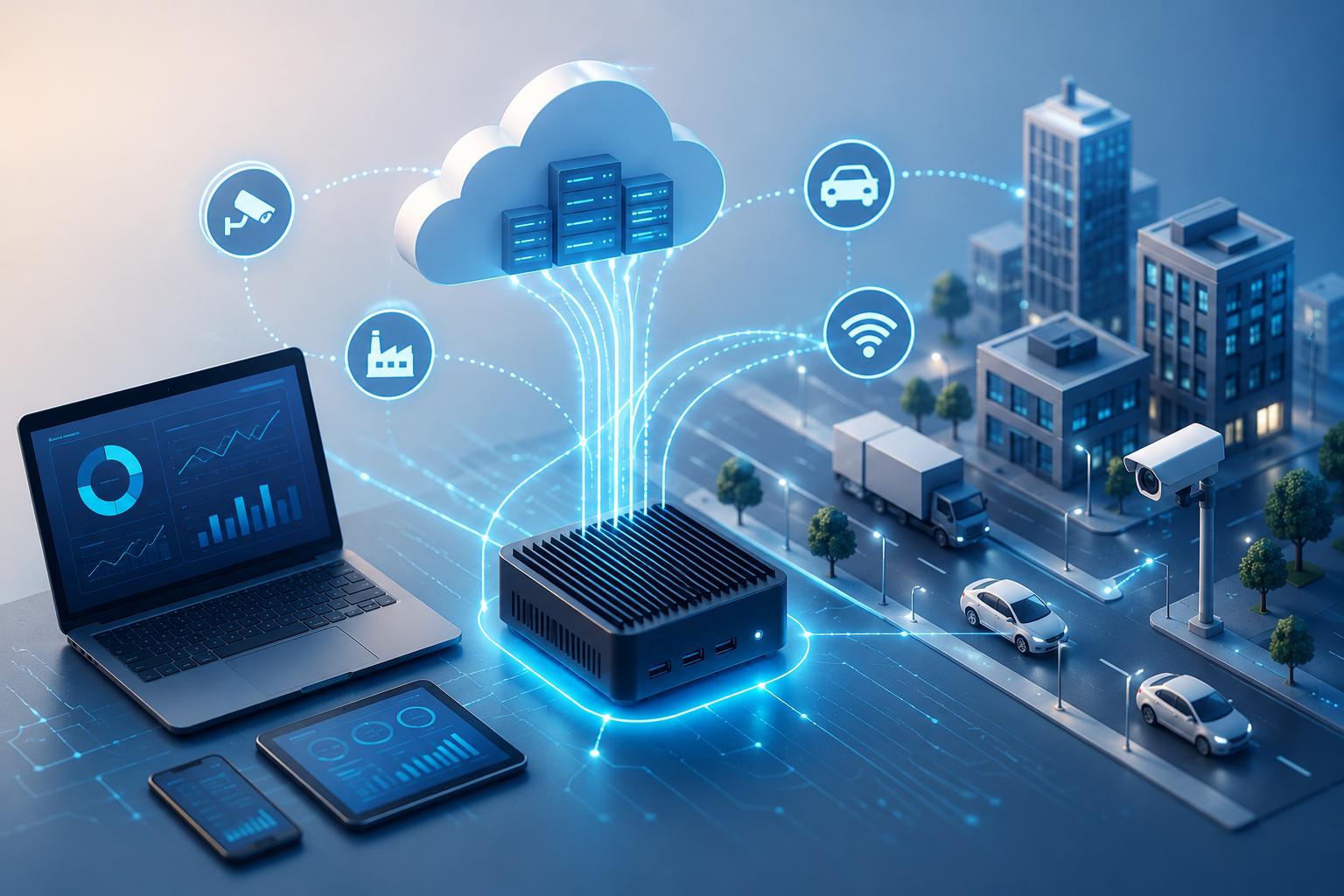
Device → Edge Processing → Cloud
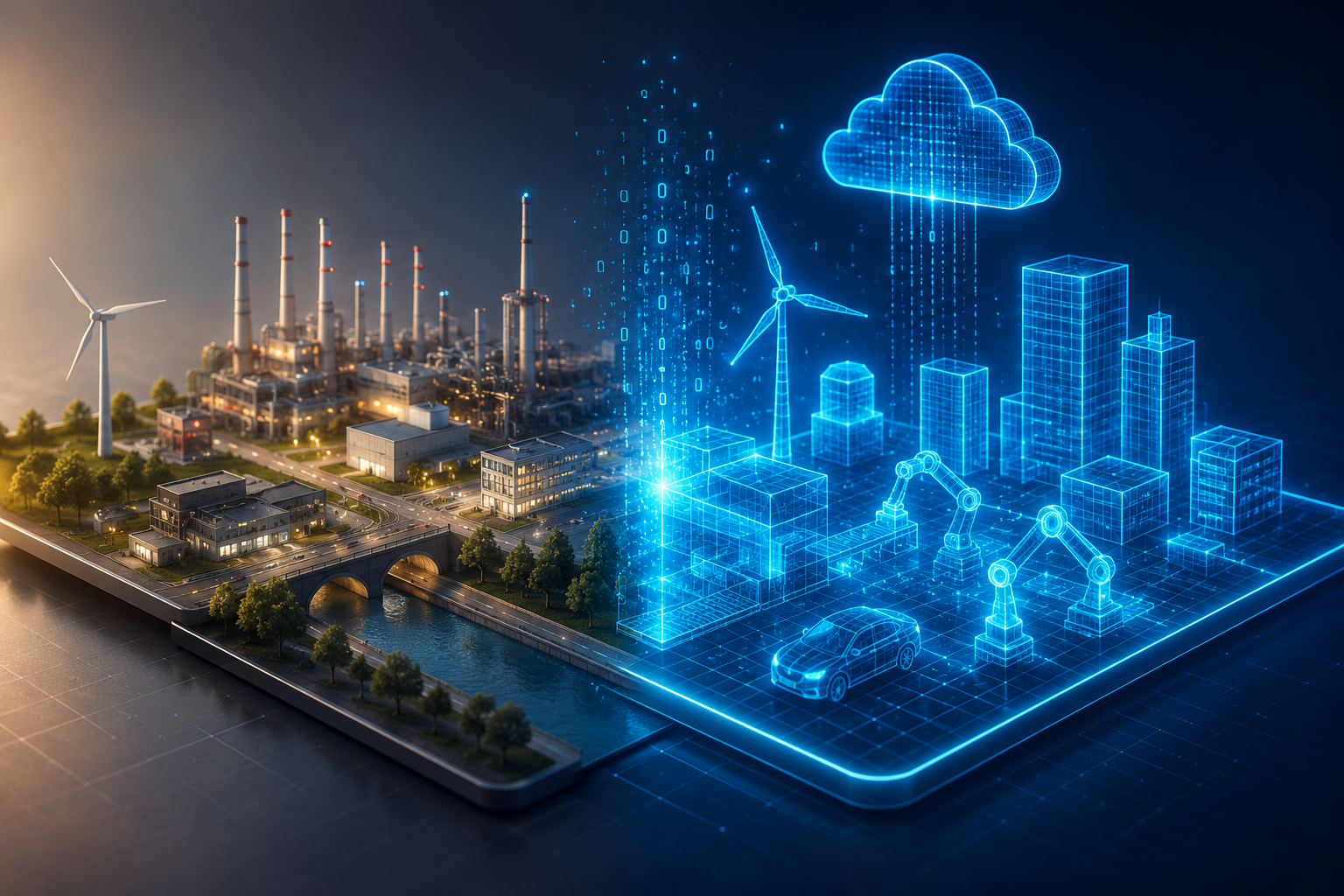
For example, a factory sensor could detect unusual machine behavior locally. The edge system could immediately identify the problem and trigger an alert, while sending selected data to the cloud for long-term analysis.
This combination can provide both rapid response and centralized intelligence.
Reducing Latency
One of the biggest advantages of edge computing is lower latency.
Latency refers to the delay between sending information and receiving a response.
For many everyday applications, a small delay may not matter.
However, some systems require extremely fast responses.
Consider an industrial machine that needs to react immediately when a dangerous condition is detected. Waiting for information to travel to a distant data center and back may introduce unnecessary delay.
Processing the information locally can allow the system to respond much faster.
This makes edge computing particularly relevant for real-time applications.
Edge Computing and Artificial Intelligence
Artificial intelligence is another area where edge computing can play an important role.
AI applications often require large amounts of data. Traditionally, this data may be sent to cloud servers for processing.
Edge AI allows some AI models to operate directly on devices or nearby computing infrastructure.
For example, a smart camera could analyze images locally to detect specific objects or events.
A connected device could process voice commands without sending every piece of audio to a remote server.
This can improve responsiveness and potentially reduce the amount of information that needs to leave the device.
As AI models become more efficient, edge-based AI is becoming increasingly practical for certain applications.
Smart Homes
Smart homes are a simple example of edge computing.
Modern homes can contain smart lights, cameras, thermostats, speakers, locks, appliances, and sensors.
Some of these devices can perform processing locally.
For example, a smart thermostat can analyze temperature readings and adjust settings without continuously sending every measurement to a remote server.
Local processing can also help smart devices continue functioning when internet connectivity is limited.
However, many smart-home products still depend on cloud services for certain features, so the exact capabilities depend on the device and architecture.
Connected Vehicles
Vehicles are becoming increasingly connected.
Modern vehicles can contain cameras, radar systems, navigation systems, sensors, entertainment platforms, and driver-assistance technologies.
These systems generate large amounts of data.
Some decisions need to happen extremely quickly. A vehicle cannot always rely on a distant cloud server to process every sensor reading before responding.
Edge computing allows certain processing to happen within the vehicle or nearby infrastructure.
This can support responsive systems while the cloud can be used for activities such as software updates, fleet analytics, mapping improvements, and long-term data analysis.
Edge Computing in Healthcare
Healthcare is another area where rapid data processing can be valuable.
Connected medical devices and monitoring systems can generate continuous information.
An edge-based system could process certain readings locally and alert healthcare professionals when predefined conditions occur.
For example, a monitoring device might detect an unusual measurement and immediately generate an alert rather than waiting for all information to be transferred to a remote system.
Healthcare applications require particularly strong privacy, security, reliability, and regulatory controls. Edge computing can help reduce unnecessary data transmission in some architectures, but local processing does not automatically guarantee privacy or security.
Manufacturing and Industrial Automation
Factories are increasingly using connected sensors and machines.
A production line may contain thousands of sensors monitoring temperature, vibration, pressure, speed, and other variables.
Sending every measurement to the cloud may be inefficient.
Edge computing allows factories to process information closer to the machines.
A system could analyze sensor readings and identify unusual patterns.
For example, increasing vibration in a machine might indicate a potential maintenance issue.
Detecting the pattern early could allow technicians to investigate before the equipment experiences a more serious failure.
This approach is often associated with predictive maintenance.
Improving Network Efficiency
Large amounts of data can consume significant network bandwidth.
Video is a good example.
A network of cameras may generate huge quantities of footage. Sending every frame to the cloud can be expensive and unnecessary.
An edge device can filter and analyze the footage locally.
Instead of continuously transmitting everything, the system might send only relevant events.
This can reduce network traffic and make the overall system more efficient.
Security Considerations
Edge computing can provide security advantages in some situations, but it also introduces new challenges.
Traditional centralized systems have fewer major computing locations to manage. Edge architectures can involve thousands or millions of distributed devices.
Every device becomes a potential security point.
Organizations therefore need strong measures such as:
- Device authentication
- Encryption
- Secure software updates
- Access controls
- Network segmentation
- Monitoring
- Vulnerability management
Physical security can also matter because edge devices may be installed in locations that are easier to access than centralized data centers.
Security needs to be considered throughout the design of an edge computing environment.
Privacy and Data Processing
Edge computing can support privacy-conscious architectures by allowing certain information to remain closer to its source.
For example, a device may process raw information locally and send only a summary or alert to a central system.
This can reduce unnecessary data transmission.
However, local processing should not automatically be considered private.
Organizations still need appropriate privacy controls, data retention policies, access restrictions, and compliance processes.
The way information is collected, processed, stored, and shared remains important regardless of where computing occurs.
Challenges of Edge Computing
Despite its advantages, edge computing is not suitable for every situation.
One challenge is managing distributed infrastructure.
A company may need to maintain thousands of devices in different locations.
Software updates, hardware failures, security patches, monitoring, and configuration can become more complicated.
Another challenge is resource limitations.
An edge device may have significantly less computing power and storage than a large cloud data center.
Organizations therefore need to decide carefully which workloads should run locally and which should remain centralized.
The Role of 5G
Faster and more responsive networks can complement edge computing.
5G networks are designed to support applications requiring high bandwidth, large numbers of connected devices, and low latency.
When combined with edge infrastructure, 5G can help connect devices to nearby computing resources.
Potential applications include smart factories, connected vehicles, augmented reality, remote monitoring, and other real-time systems.
The exact benefits depend on network deployment, device capabilities, application requirements, and infrastructure design.
Edge Computing and Everyday Technology
Edge computing may sound like an enterprise technology, but its effects can increasingly appear in everyday products.
Smartphones already perform substantial processing locally.
Modern devices can process images, recognize speech, run AI models, manage sensors, and perform other tasks without sending every operation to a remote server.
As processors become more powerful and energy-efficient, more applications can potentially operate directly on local devices.
This could make technology faster and more responsive while reducing dependence on constant cloud connectivity for certain functions.
The Future of Edge Computing
The future of computing is unlikely to belong exclusively to either the cloud or the edge.
Instead, businesses and technology developers are likely to use a combination of centralized and distributed computing.
Cloud platforms can handle large-scale storage, global coordination, and complex analytics.
Edge devices can handle time-sensitive processing and local decision-making.
AI, connected devices, robotics, smart infrastructure, and industrial automation could further increase the demand for this hybrid approach.
As more devices become intelligent and connected, processing information closer to where it is generated can become increasingly valuable.
Final Thoughts
Edge computing represents an important shift in how digital systems process information.
Rather than sending every piece of data to a distant server, organizations can perform selected tasks closer to the source.
This can reduce latency, improve responsiveness, lower network demands, and support new types of connected applications.
From smart homes and connected vehicles to manufacturing, healthcare, and artificial intelligence, edge computing has the potential to influence many areas of technology.
The biggest opportunity may come from combining edge computing with cloud services. Local devices can handle tasks that require immediate responses, while centralized cloud systems can manage large-scale storage and analysis.
As the number of connected devices continues to grow, the ability to process information efficiently—wherever it is generated—will become an increasingly important part of modern technology.