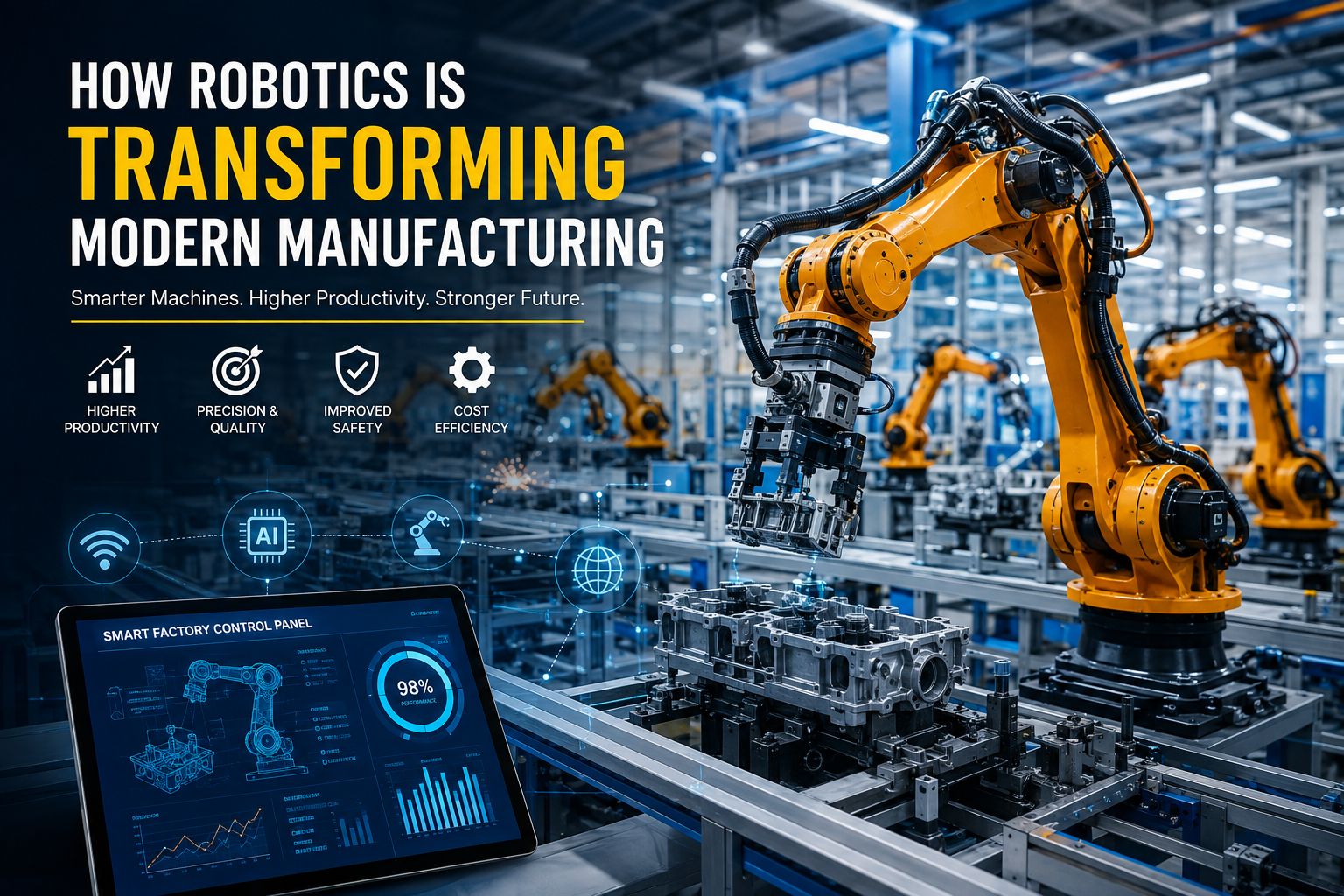
Robotics is entering a new phase. For decades, robots were primarily associated with factories and highly controlled industrial environments. Today, advances in artificial intelligence, computer vision, sensors, batteries, connectivity, and computing are allowing robots to operate in increasingly complex settings.
The next decade could be particularly important for robotics. Machines are becoming more adaptable, autonomous, and capable of interacting with humans. At the same time, companies are exploring robots for warehouses, farms, hospitals, homes, construction sites, transportation systems, and other environments.
The future of robotics will not be defined by a single machine. Instead, it will involve an expanding ecosystem of specialized and general-purpose robots.
AI-Powered Robots
Artificial intelligence is likely to be one of the biggest drivers of robotics development.
Traditional robots generally follow predefined instructions. AI-powered robots can potentially analyze information, recognize objects, understand environments, and select actions based on changing circumstances.
This could make robots more flexible.
Instead of programming every possible situation, developers can increasingly build systems capable of interpreting sensor data and adapting their behavior within defined boundaries.
Humanoid Robots
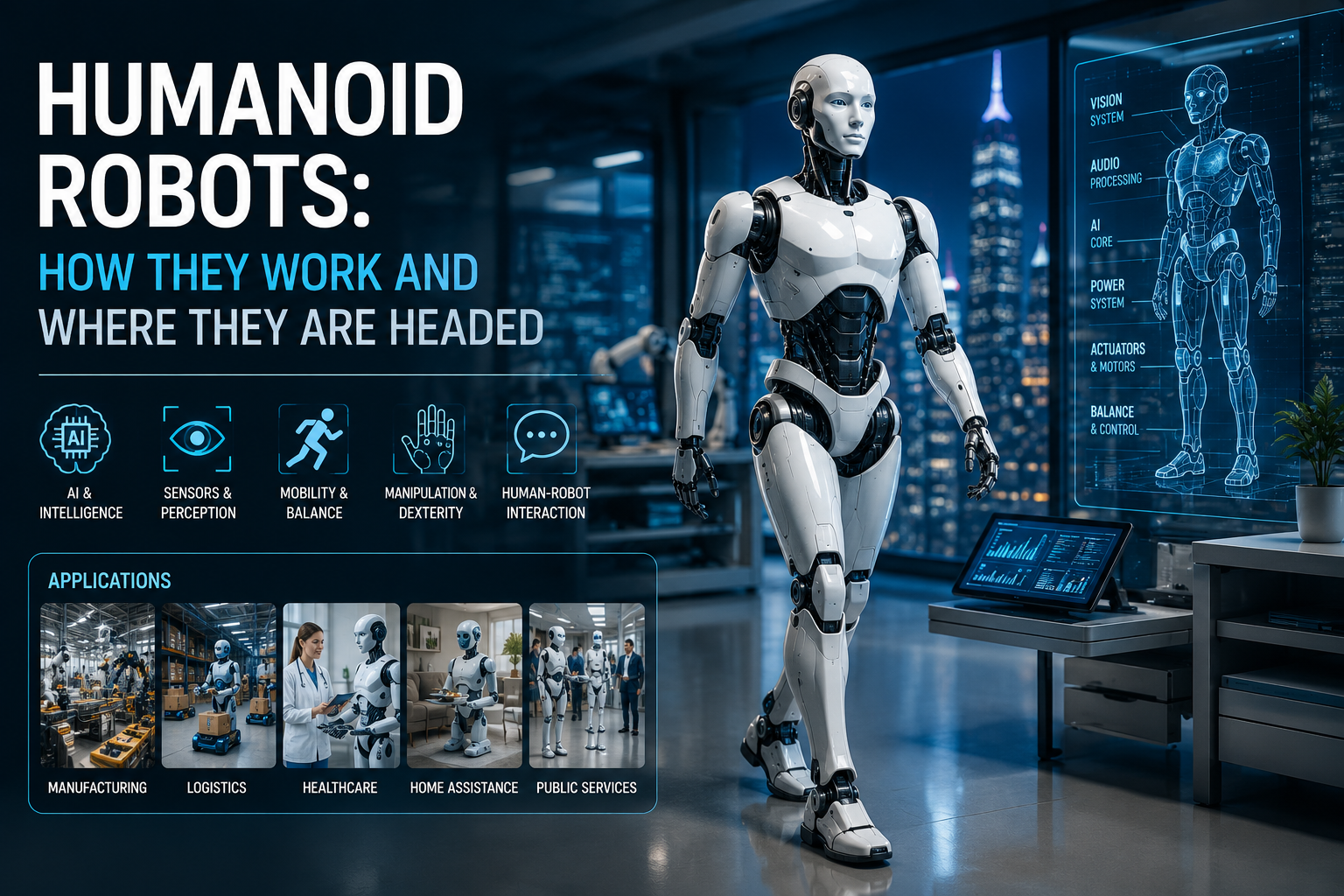
Humanoid robots are receiving significant attention because they are designed to operate in human environments.
Their ability to walk, manipulate objects, and use existing tools could make them useful for certain industrial, logistics, and service applications.
However, humanoid robots face major challenges involving energy efficiency, reliability, dexterity, safety, and cost.
Their commercial success will depend on whether they can provide clear economic value compared with specialized machines.
Autonomous Mobile Robots
Autonomous mobile robots are already becoming important in warehouses, factories, hospitals, and other facilities.
These machines can move materials without requiring constant human control.
Future systems may operate in larger fleets, coordinating their movements through centralized software.
Fleet-management systems could assign tasks dynamically, optimize routes, and monitor robot performance.
This could transform warehouses into highly automated environments where people and machines work together.
Swarm Robotics
Swarm robotics takes inspiration from groups of insects and other collective systems.
Instead of relying on one extremely powerful robot, a swarm can consist of many smaller machines working together.
If one robot stops working, others can potentially continue the mission.
Swarm robotics could have applications in agriculture, environmental monitoring, search operations, inspection, and logistics.
The major challenge is coordination. Robots need to communicate and distribute tasks effectively without creating unnecessary complexity.
Agricultural Robotics
Agriculture is another area where robotics could make a major difference.
Farm robots can assist with planting, monitoring, harvesting, weeding, and crop inspection.
Computer vision can help machines distinguish crops from weeds or identify signs of plant stress.
Autonomous systems could potentially operate over large fields while collecting detailed information about crop conditions.
Agricultural robotics may become increasingly important as farmers seek greater efficiency and more precise resource management.
Robots in Construction
Construction sites are challenging environments because conditions change constantly.
Robots may eventually assist with bricklaying, surveying, material transportation, drilling, inspection, and other tasks.
Automated construction technologies could improve productivity and reduce exposure to dangerous activities.
Robotic systems may also work with digital building models, allowing machines to perform highly accurate construction tasks based on digital instructions.
Robotics-as-a-Service
The cost of purchasing advanced robots can be a barrier for smaller companies.
Robotics-as-a-Service models could address this problem by allowing businesses to pay for robotic capabilities through subscriptions, leasing, or usage-based arrangements.
Instead of making a large upfront investment, a company could potentially deploy robots as an operating service.
This model could accelerate adoption, particularly among businesses that need automation but lack specialized robotics teams.
Human-Robot Collaboration
The future is unlikely to involve humans and robots working completely separately.
Human-robot collaboration is becoming increasingly important.
People are generally better at judgment, communication, creativity, and handling unexpected situations. Robots are strong at repetitive, precise, and physically demanding activities.
Combining these strengths can create efficient workflows.
Future workplaces may therefore be designed around teams where humans and robots perform complementary tasks.
Edge Computing and Robotics
Robots require rapid processing of sensor information.
Sending every piece of data to a distant cloud server may introduce delays or connectivity problems.
Edge computing allows some processing to occur closer to the robot.
This can reduce latency and potentially improve responsiveness.
A future robot may combine onboard computing with cloud-based services, using local systems for time-sensitive decisions and remote systems for more demanding analysis.
Better Robotic Vision
Computer vision will continue to improve.
Robots need to understand objects, surfaces, people, obstacles, and changing environments.
Future vision systems may become better at recognizing unfamiliar objects and estimating their position.
This could make robots more capable of working in environments that are not perfectly organized.
Better vision will be particularly important for logistics, agriculture, healthcare, construction, and domestic robots.
Domestic Robots
Household robotics has long been a popular idea, but widespread general-purpose home robots remain challenging.
Homes are unpredictable environments containing furniture, pets, people, stairs, small objects, and constantly changing layouts.
Robots must also be safe around children and elderly people.
Future domestic robots may initially focus on specific tasks such as cleaning, transportation of objects, monitoring, or assistance.
As technology improves, more general-purpose household capabilities could emerge.
Autonomous Delivery
Robotic delivery systems are being explored for transporting food, packages, medicines, and other goods.
Small autonomous delivery robots could operate over sidewalks or controlled areas.
Drones may also play a role in certain delivery networks where regulations and infrastructure permit.
The development of these systems will depend on navigation technology, safety standards, local regulations, battery performance, and public acceptance.
Robotics and Sustainability
Robotics could contribute to sustainability by improving efficiency.
Agricultural robots may help apply water, fertilizer, or crop treatments more precisely.
Manufacturing robots can reduce material waste through consistent processes.
Inspection robots can identify equipment problems before failures result in major resource losses.
However, robots also consume energy and require materials for manufacturing. Sustainable robotics therefore requires consideration of the complete lifecycle of machines, including production, operation, maintenance, and recycling.
Cybersecurity and Safety
As robots become more connected, cybersecurity becomes increasingly important.
A network-connected robot can potentially communicate with cloud platforms, factory systems, mobile applications, or other machines.
Unauthorized access could create serious operational and safety risks.
Future robotics systems will therefore need strong authentication, secure software, monitoring, regular updates, and carefully designed access controls.
Physical safety is equally important. Robots operating around people must be designed and tested to minimize dangerous interactions.
New Skills for a Robotic Economy
The growth of robotics will create demand for new skills.
Robotics technicians, AI specialists, control engineers, computer vision developers, mechanical engineers, cybersecurity professionals, and automation managers are likely to remain important.
At the same time, workers in nontechnical roles will increasingly need basic digital and automation literacy.
Education systems may therefore place greater emphasis on robotics, programming, mathematics, engineering, data, and problem-solving.
Will Robots Replace Humans?
This question will remain central to discussions about robotics.
Some repetitive tasks will almost certainly become more automated. However, work consists of many different activities, and robots may replace individual tasks rather than entire occupations.
New jobs can also emerge around designing, maintaining, operating, supervising, and improving robotic systems.
The transition may nevertheless be difficult for some workers. Retraining and lifelong learning will become increasingly important.
The Next Decade of Robotics
The next decade could bring robots that are more capable of learning, navigating, manipulating objects, communicating, and collaborating.
AI may make robots more adaptable, while improved batteries and hardware could increase their operating time.
The most successful robots will probably be those that solve real problems economically rather than those that simply demonstrate impressive technology.
Businesses and governments will also need to establish appropriate standards for safety, privacy, cybersecurity, employment, and responsible deployment.
Conclusion
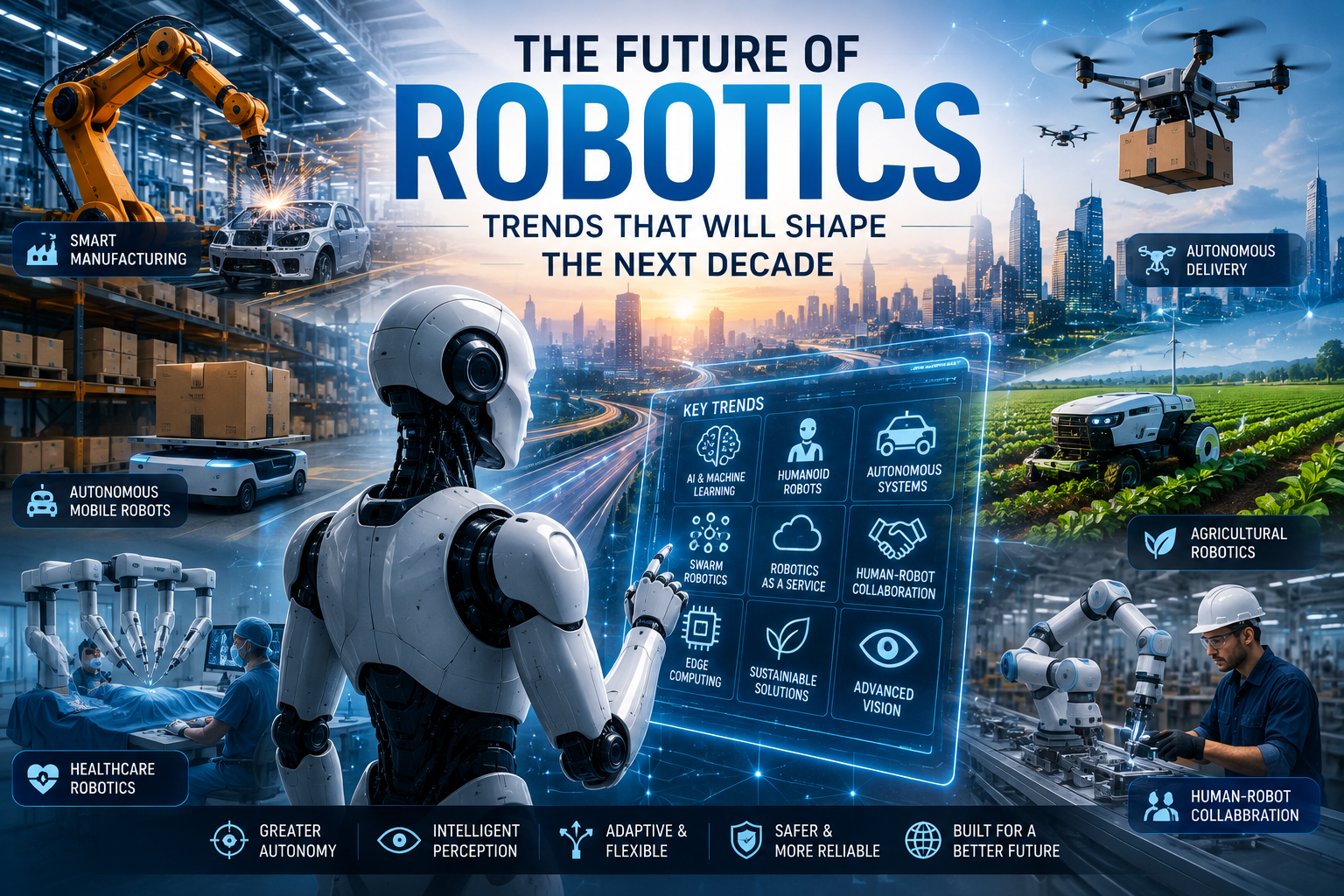
The future of robotics is broader than industrial automation. AI-powered machines, humanoid robots, autonomous mobile systems, agricultural robots, construction machines, healthcare technologies, domestic assistants, and robotic delivery platforms could all become increasingly important.
The technology still faces substantial challenges, but progress is accelerating across hardware and software.
Ultimately, robotics will have the greatest impact when machines become reliable tools that work alongside people rather than simply replacing them. The next decade could therefore mark a major shift toward a world where intelligent machines become a normal part of workplaces, public infrastructure, healthcare, agriculture, and everyday life.