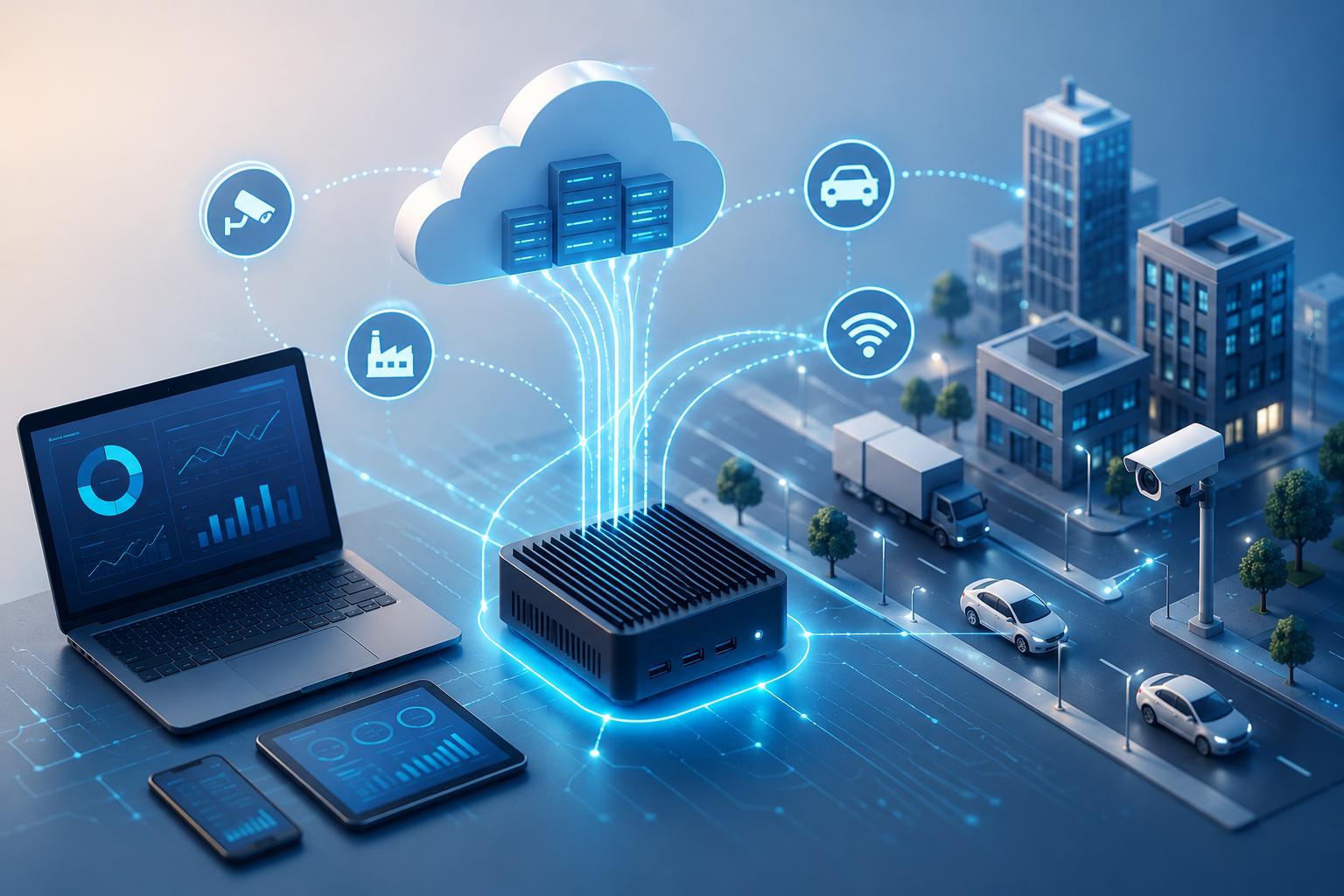
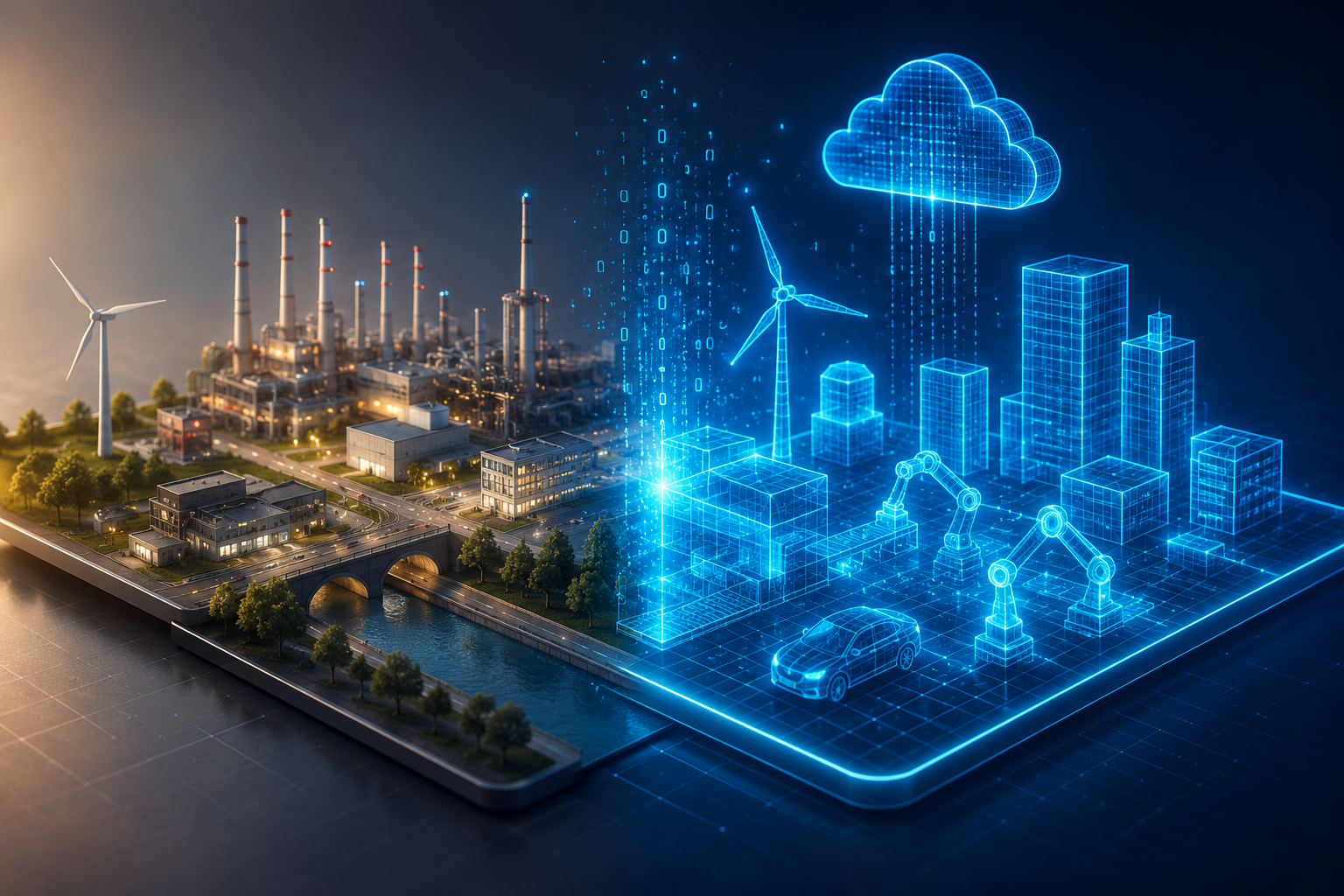
Technology is increasingly connecting the digital world with the physical world. Sensors, artificial intelligence, cloud computing, Internet of Things devices, and advanced analytics allow organizations to collect detailed information about physical objects and environments.
One technology that brings many of these capabilities together is the digital twin.
A digital twin is a virtual representation of a physical object, system, process, or environment. It can use information from the real world to represent how something operates and, in more advanced applications, help predict how it may behave under different conditions.
Digital twins are being explored across manufacturing, construction, transportation, healthcare, energy, smart cities, and many other industries.
The concept may sound futuristic, but its basic idea is relatively straightforward: create a useful digital representation of something that exists in the physical world and continuously improve that representation with data.
What Is a Digital Twin?
A digital twin is a digital model connected to a real-world object or system through data.
Imagine a factory machine equipped with sensors that measure temperature, vibration, pressure, and operating speed.
Instead of simply collecting those readings in a database, a company could create a digital model of the machine.
The model could represent the machine’s current condition and historical behavior.
When new sensor data arrives, the digital representation can be updated.
This creates a connection between the physical asset and its digital counterpart.
A simple digital twin system can be viewed as:
Physical Object → Sensors → Data → Digital Model → Analysis → Action
The exact design depends on the industry and purpose.
How Digital Twins Work
Digital twins generally rely on several technologies working together.
Sensors
Sensors collect information from physical objects or environments.
Depending on the application, sensors might measure:
- Temperature
- Pressure
- Vibration
- Location
- Speed
- Humidity
- Energy consumption
- Movement
Connectivity
The collected information needs to reach the digital system.
Networks can connect sensors and devices to local infrastructure or cloud platforms.
Data Processing
The system processes the incoming information and organizes it into a useful format.
Digital Modeling
A virtual model represents the physical object or system.
Analytics and AI
Advanced systems can analyze historical and real-time data to identify patterns, anomalies, and potential problems.
Together, these technologies can create a continuously updated representation of a real-world environment.
Digital Twins in Manufacturing
Manufacturing is one of the most important applications of digital twin technology.
Factories contain complex machinery, production lines, robots, sensors, and control systems.
A digital twin can help engineers understand how equipment is operating without relying exclusively on physical inspections.
For example, a manufacturer could create a digital model of a production machine.
The model could incorporate sensor information and historical performance data.
If vibration levels begin to change, engineers might investigate whether the machine requires maintenance.
This can support predictive maintenance strategies.
Predictive Maintenance
Traditional maintenance often follows a schedule.
A machine may be inspected every month or every few thousand operating hours.
Another approach is reactive maintenance, where equipment is repaired after it breaks.
Predictive maintenance attempts to identify potential problems before major failures occur.
Digital twins can contribute to this process by combining sensor data with historical information.
Suppose a machine has previously experienced failures when temperature and vibration increased together.
A digital twin system may help identify similar patterns in the future.
Engineers can then investigate the machine before a serious breakdown occurs.
Predictive maintenance does not guarantee that failures will be prevented, but it can provide additional information for maintenance decisions.
Digital Twins in Construction
Construction projects can also benefit from digital representations.
A digital twin can combine information about a building’s design, materials, systems, and physical condition.
During construction, digital models can help teams understand how different components fit together.
After a building is completed, the digital representation can potentially continue to support operations and maintenance.
For example, building managers could use sensor data to monitor energy consumption, equipment performance, temperature, or occupancy.
This can help them understand how the building operates over time.
Smart Buildings
Modern buildings contain increasingly sophisticated systems.
Heating, ventilation, air conditioning, lighting, security, elevators, and energy systems can all generate data.
A digital twin can provide a central representation of these systems.
Building managers may be able to examine how different systems interact and identify opportunities for improvement.
For example, if a building consumes unusually high amounts of energy during certain periods, managers can investigate possible causes.
Digital twins can therefore support more data-driven facility management.
Digital Twins in Transportation
Transportation systems are another potential application.
Airports, rail networks, roads, ports, and vehicles generate significant amounts of information.
A digital twin can represent infrastructure and operational conditions.
For example, transportation managers could use digital models to understand traffic patterns, equipment conditions, or infrastructure performance.
In vehicle development, digital twins can also help engineers simulate different conditions before making changes to physical prototypes.
This can reduce the need for some physical testing and allow engineers to explore more scenarios during development.
Digital Twins and Healthcare
Healthcare is an emerging area for digital twin concepts.
Researchers and technology companies are exploring ways to create digital representations of biological systems, medical equipment, and healthcare environments.
A digital model could potentially combine information from medical devices and other sources to help professionals understand complex systems.
However, healthcare applications require particularly careful attention to privacy, security, safety, accuracy, and regulation.
Digital models should support professional decision-making rather than being treated as unquestionable replacements for qualified medical judgment.
Digital Twins and Smart Cities
Cities contain interconnected systems such as roads, buildings, water networks, public transportation, energy infrastructure, and waste management.
A city-scale digital twin can attempt to represent some of these systems digitally.
City planners could use data to examine how changes might affect traffic, energy use, infrastructure, or public services.
For example, planners might model the potential effects of a new road or changes to public transportation.
The ability to explore scenarios digitally can provide valuable information before implementing physical changes.
Digital Twins and Energy Management
Energy systems can also benefit from digital modeling.
Power plants, renewable energy installations, electrical networks, and industrial facilities generate substantial operational data.
A digital twin can help operators understand performance and identify unusual conditions.
For renewable energy, a digital model could incorporate information about equipment performance and environmental conditions.
This may help operators plan maintenance and improve operational efficiency.
The Role of Artificial Intelligence
Artificial intelligence can make digital twins more useful.
A basic digital model may show what is happening now.
AI and advanced analytics can potentially help explain why something is happening and estimate what might happen next.
For example, an AI system could analyze years of machine data and identify patterns associated with equipment degradation.
The digital twin could then incorporate those insights.
This combination creates a more intelligent system for monitoring and analysis.
However, AI predictions depend heavily on data quality and model design. Poor data can lead to poor conclusions.
Benefits of Digital Twins
Digital twins can provide several potential advantages.
Better Monitoring
Organizations can gain a more detailed view of physical systems.
Faster Problem Detection
Continuous data can help identify unusual conditions earlier.
Improved Maintenance
Predictive analysis can help teams plan maintenance more effectively.
Reduced Testing Costs
Some scenarios can be explored digitally before physical implementation.
Better Decision-Making
Managers and engineers can use data to compare options.
Improved Efficiency
Organizations can identify inefficient processes and equipment.
Risk Reduction
Simulations can help teams examine possible outcomes before making changes.
The actual benefits depend on the quality of the digital twin and how effectively an organization uses the information.
Challenges of Digital Twins
Digital twin technology also comes with challenges.
The first is data quality.
A digital model is only useful when the information feeding it is accurate and reliable.
Another challenge is cost.
Creating sensors, connectivity, software, models, storage, and analytics infrastructure can require significant investment.
Integration can also be difficult.
Organizations often use equipment and software from different vendors. Connecting these systems may require additional work.
Cybersecurity is another major concern.
A digital twin may provide detailed information about physical infrastructure. Unauthorized access could therefore create serious risks.
Organizations need appropriate security measures to protect both digital systems and physical assets.
Digital Twins and the Internet of Things
The Internet of Things, or IoT, is closely connected to digital twins.
IoT devices provide the data that digital twins often need.
Sensors can continuously collect information from physical environments and send it to software platforms.
The digital twin can then use that information to update its representation.
In simple terms:
IoT provides the data, while the digital twin provides a digital representation and context for that data.
This relationship can become especially valuable when thousands of connected devices are involved.
Digital Twins vs. Simulations
Digital twins and simulations are related but not identical.
A simulation is generally a model used to explore how a system might behave under certain conditions.
A digital twin is typically connected to a real-world object or system and can be updated using real-world data.
For example, an engineer might simulate how a machine would behave under high temperatures.
A digital twin could combine that type of modeling with actual sensor data from a real machine.
The two technologies can therefore complement each other.
The Future of Digital Twins
Digital twins are likely to become increasingly connected with AI, IoT, cloud computing, robotics, and advanced analytics.
As sensors become smaller and more affordable, more physical systems can generate detailed data.
At the same time, better computing infrastructure can process larger amounts of information.
This could lead to increasingly sophisticated digital representations of factories, buildings, transportation systems, energy infrastructure, and other environments.
The technology may eventually become an important part of how organizations design, operate, maintain, and improve complex physical systems.
Final Thoughts
Digital twins represent an important development in modern technology because they connect physical systems with digital models and real-time information.
From manufacturing equipment to smart buildings and transportation infrastructure, digital twins can help organizations understand how physical systems behave.
Their greatest value may come from combining several technologies rather than operating independently. Sensors collect information, networks transmit it, software creates digital models, analytics identifies patterns, and artificial intelligence can help generate additional insights.
Digital twins are not simply virtual copies of physical objects. When designed effectively, they can become powerful tools for monitoring, analysis, simulation, maintenance, and decision-making.
As organizations continue to digitize their physical operations, digital twins could play an increasingly important role in shaping the future of technology.