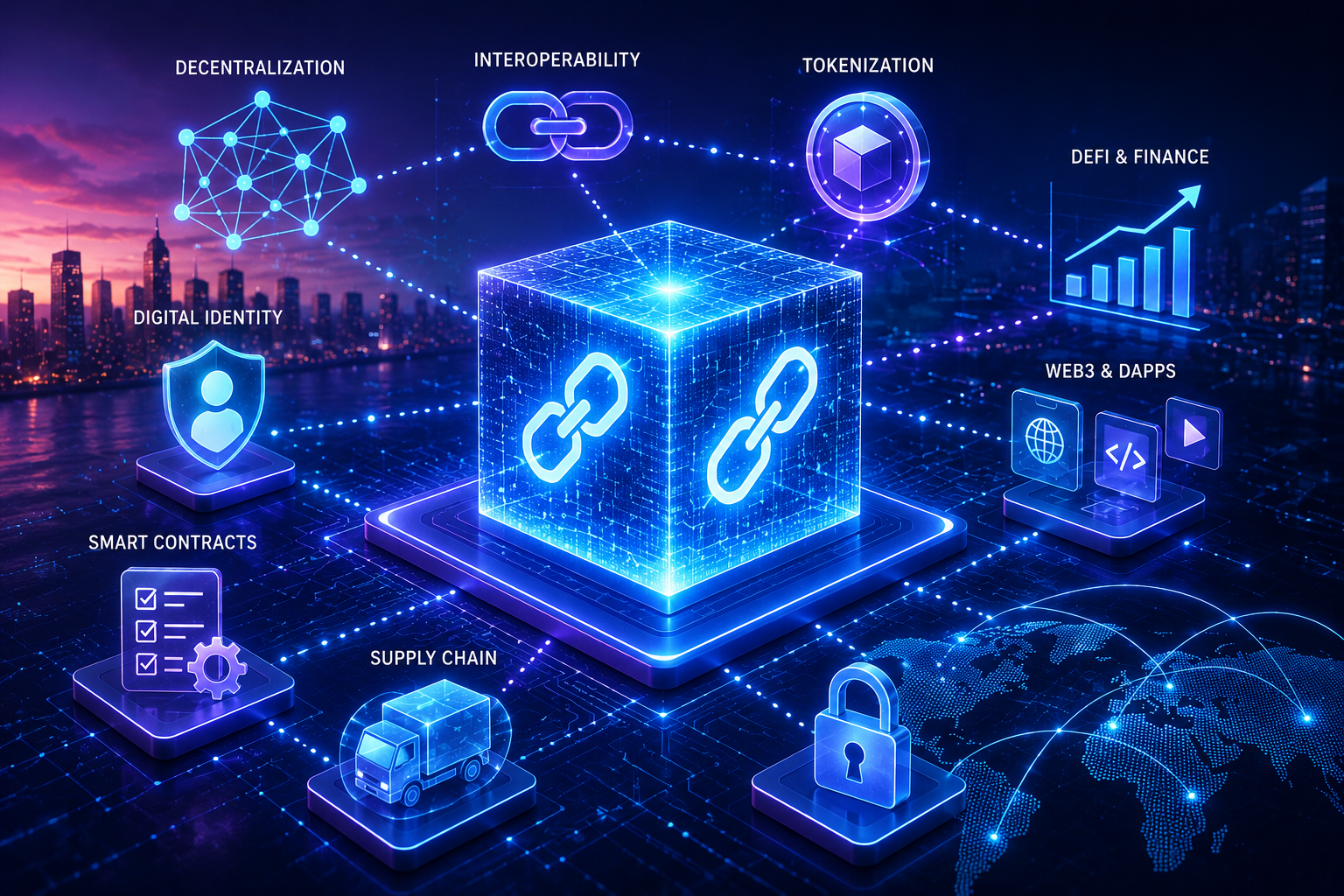

Blockchain is often associated with cryptocurrency, digital coins, and decentralized finance. However, the technology has a much broader purpose. At its core, blockchain is a method of recording and sharing information across a distributed network without relying on a single central authority to maintain the database. This capability is attracting attention from businesses across industries that want to improve transparency, security, efficiency, and trust.
As organizations continue to digitize their operations, traditional databases and centralized systems can create challenges. Information may be stored in separate systems, records can be difficult to verify, and different organizations may struggle to agree on which version of data is accurate. Blockchain offers another approach by creating a shared, tamper-resistant record that authorized participants can access.
The growing interest in enterprise blockchain demonstrates that the technology is moving beyond cryptocurrency. From tracking products to managing digital identities, blockchain can support a variety of business processes.
What Is Blockchain?
Blockchain is a distributed ledger technology that stores information in a sequence of linked records called blocks. Each block contains information about transactions or other data and is connected to the previous block using cryptographic techniques.
Instead of keeping the entire record in one central database, a blockchain network can distribute copies of the ledger among multiple participants. Changes are validated according to the network’s rules before they are added to the ledger.
This structure can make unauthorized alteration of historical records extremely difficult. Rather than depending entirely on one organization to maintain records, participants can use a shared system to verify information.
Blockchain networks can be public, where participation is generally open, or permissioned, where access is limited to approved organizations or users. Businesses often consider permissioned blockchain networks when participants need greater control over data and access.
Why Businesses Are Interested in Blockchain
One of blockchain’s most important business advantages is its ability to create a shared source of information.
Consider a supply chain involving manufacturers, shipping companies, warehouses, distributors, retailers, and customers. Each organization may maintain its own records. If the information does not match, resolving discrepancies can take time.
A blockchain-based system can allow authorized participants to record relevant events on a shared ledger. This can improve visibility and reduce the need for repeated reconciliation.
Blockchain may also provide a stronger audit trail. Because records are linked and changes can be tracked, organizations can potentially identify when information was recorded and which participant submitted it.
However, blockchain is not automatically better than a traditional database. Businesses need to evaluate whether decentralization, shared verification, and tamper resistance actually solve a particular problem.
Blockchain in Supply Chain Management
Supply chain management is one of the most frequently discussed enterprise applications of blockchain.
Modern supply chains can involve numerous organizations and geographic locations. Tracking products from their origin to the final customer can become complicated when information is fragmented.
Blockchain can help create a shared record of important supply-chain events. For example, manufacturers could record production information, logistics providers could record shipment milestones, and retailers could record receiving information.
This can make it easier to trace products and investigate problems.
In industries where product authenticity matters, blockchain could also support provenance tracking. A company might use a blockchain system to record information about where a product originated and how it moved through the supply chain.
The technology does not guarantee that every piece of information entered is accurate. Businesses still need reliable processes for collecting and validating data.
Transforming Financial Services
Blockchain’s relationship with cryptocurrency has made financial services one of its most natural areas of development.
Banks and financial institutions have explored blockchain for applications involving payments, settlement, trade finance, asset records, and transaction reconciliation.
Traditional financial transactions can involve multiple intermediaries. Each participant may maintain separate records, creating additional processing and reconciliation requirements.
A shared ledger could potentially reduce duplication by allowing authorized parties to work from synchronized information.
Blockchain can also support tokenization, where digital tokens represent ownership or claims associated with assets. Depending on the legal and technical structure, tokenization could be applied to financial instruments, real estate, commodities, or other assets.
Nevertheless, financial institutions must consider regulatory requirements, privacy, interoperability, and operational risks before deploying blockchain solutions.
Healthcare and Medical Records
Healthcare organizations generate enormous amounts of information, including patient records, prescriptions, test results, insurance information, and billing data.
Blockchain could potentially help different healthcare organizations coordinate access to verified information without requiring every organization to maintain identical databases.
For example, a blockchain-based identity or authorization system could help manage permissions associated with medical information. Patients could potentially have greater visibility into how their information is shared.
Privacy remains critical, however. Sensitive medical information should not simply be placed on a public blockchain. Systems need carefully designed access controls, encryption, and data-storage strategies.
Blockchain may therefore work better as part of a broader healthcare information architecture rather than as a replacement for existing medical databases.
Digital Identity and Verification
Digital identity is another area where blockchain may have significant potential.
People regularly provide identity information to banks, government agencies, educational institutions, employers, and online platforms. Each organization may maintain separate identity records, creating duplication and increasing the number of places where sensitive information is stored.
Blockchain-based identity systems could provide mechanisms for verifying credentials without requiring users to repeatedly submit the same information.
For example, an educational institution could issue a digitally verifiable certificate. A graduate could then share that credential with an employer, who could verify its authenticity.
This approach could make digital credentials easier to verify while reducing dependence on paper documents.
Real Estate and Property Records
Property transactions often involve substantial documentation and multiple parties, including buyers, sellers, lenders, agents, lawyers, and government authorities.
Blockchain could potentially improve the management of property records by creating a transparent history of ownership-related information.
Tokenization may also allow certain forms of property ownership or investment to be represented digitally. However, legal recognition remains essential. A blockchain record does not automatically establish ownership under local law.
For blockchain to become widely useful in real estate, governments, financial institutions, and legal systems would need appropriate standards and integration.
Smart Contracts and Business Automation
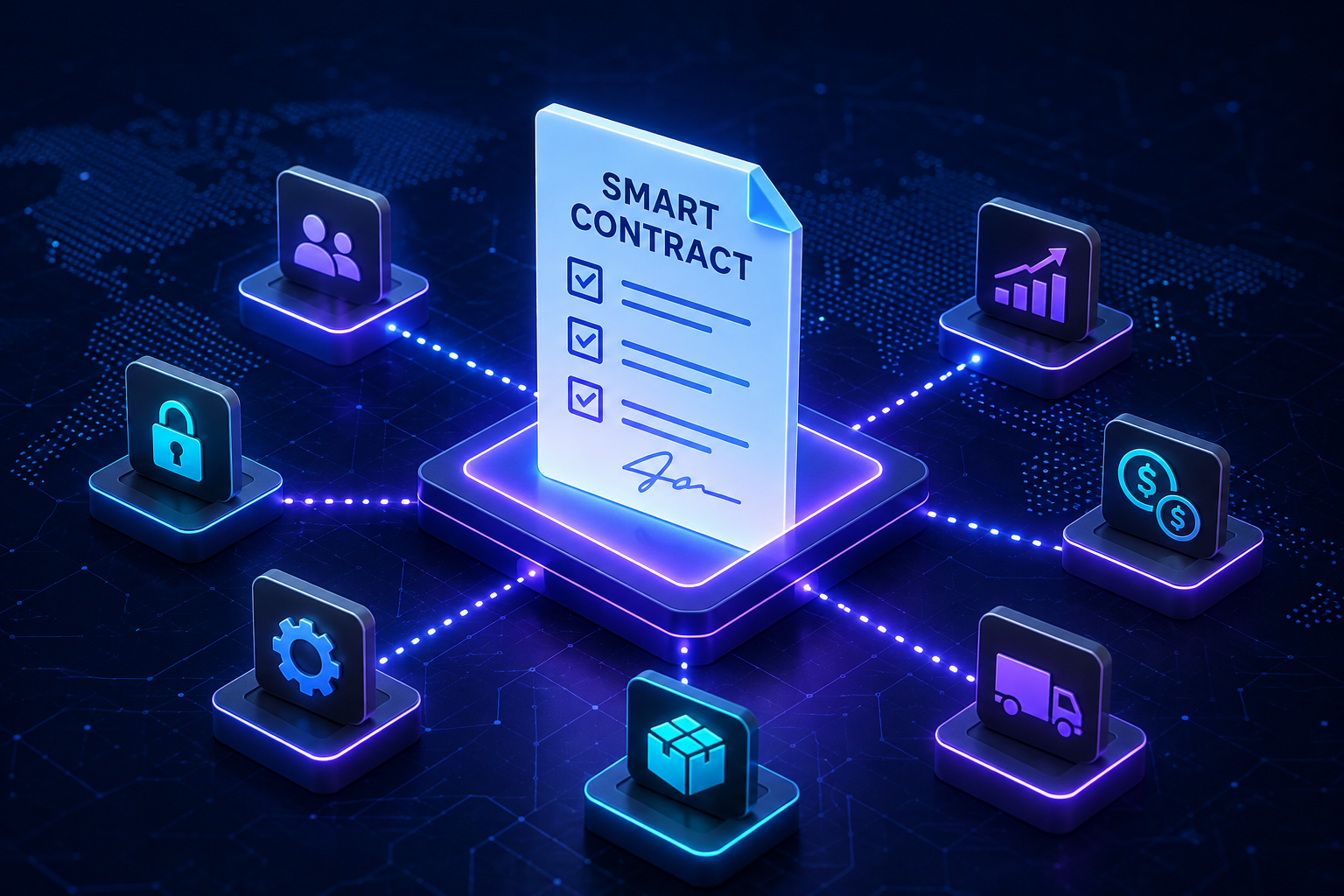
Smart contracts are programs that automatically execute predefined actions when specified conditions are met.
For businesses, smart contracts can potentially automate processes that traditionally require manual verification.
For example, a payment could be triggered automatically after a verified delivery event. An insurance-related process could initiate a predefined action after receiving validated information about an eligible event.
Automation can reduce administrative work and improve processing speed. But smart contracts also introduce new risks. Programming errors, incorrect external data, and poorly designed business logic can cause unintended outcomes.
Businesses therefore need strong testing, auditing, governance, and monitoring processes when using smart contracts.
Improving Transparency and Auditing
Organizations in many industries need reliable records for compliance, auditing, and reporting.
Blockchain can provide a chronological record of transactions or events that authorized participants can independently verify. This can make certain auditing processes more efficient.
For example, a company could maintain records of supply-chain certifications or compliance events on a permissioned ledger. Auditors could then examine the relevant records without relying solely on manually exchanged documents.
The value comes from the integrity and accessibility of the shared record, not simply from calling a system “blockchain.”
Challenges Businesses Must Consider
Despite its potential, blockchain has several limitations.
Scalability is an important concern. Some blockchain networks may struggle to process large numbers of transactions quickly or economically.
Integration is another challenge. Most companies already rely on enterprise software, databases, payment systems, and cloud infrastructure. Connecting blockchain networks to these systems can require significant technical work.
Privacy must also be carefully managed. Businesses cannot assume that distributed records are automatically appropriate for sensitive information.
Regulation remains another major consideration. Laws and regulatory frameworks differ between countries and industries, particularly around digital assets, financial transactions, data protection, and tokenization.
Finally, blockchain projects can be expensive and complex to implement. Organizations should first identify a genuine business problem before choosing blockchain as the solution.
The Future of Enterprise Blockchain
The future of blockchain in business is likely to involve practical applications rather than simply replacing traditional databases.
Interoperability could become increasingly important as organizations use multiple blockchain networks and conventional systems. Businesses will need these systems to communicate efficiently.
Tokenization may also expand as organizations explore new ways to represent assets digitally. At the same time, improvements in blockchain infrastructure could address some concerns around speed, cost, and scalability.
Enterprise adoption will ultimately depend on whether blockchain can deliver measurable value. Businesses are unlikely to adopt the technology simply because it is innovative. They will use it when it can improve a process, reduce friction, strengthen verification, or create new opportunities.
Conclusion
Blockchain has developed far beyond its original association with cryptocurrency. Its ability to maintain shared, verifiable records makes it relevant to many business processes, including supply chains, financial services, healthcare, digital identity, real estate, and automated agreements.
However, blockchain is not a universal solution. Organizations must consider costs, scalability, privacy, regulations, integration, and data quality before adopting it.
The most successful business applications are likely to be those where blockchain addresses a specific problem that conventional technology cannot solve as effectively. As the technology matures, businesses will increasingly focus less on blockchain as a buzzword and more on the practical value that distributed ledgers can provide.
For companies willing to evaluate the technology carefully, blockchain could become an important component of the next generation of digital business infrastructure.