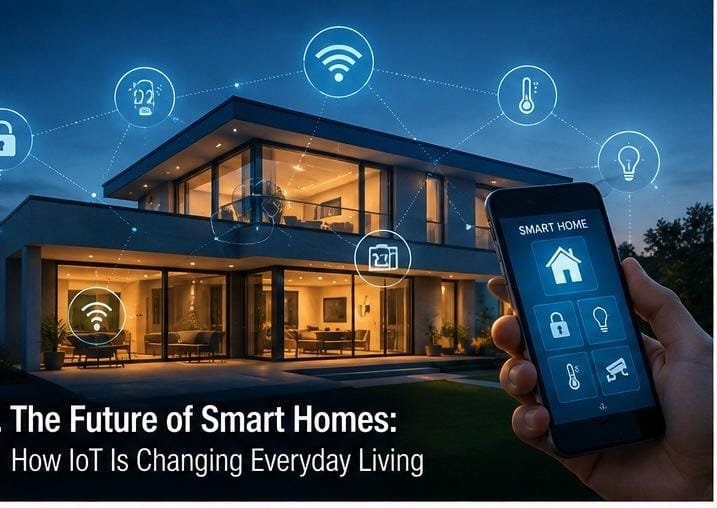
The idea of a smart home has moved from science fiction into everyday life. Lights can turn on automatically, thermostats can adjust temperatures based on preferences, security cameras can send alerts to smartphones, and appliances can communicate with other devices. Behind these capabilities is the Internet of Things, commonly known as IoT.
IoT connects physical devices to networks so they can collect, exchange, and sometimes act on data. In a smart home, this means ordinary household objects can become connected systems capable of responding to people, schedules, environmental conditions, and instructions.
The future of smart homes is not simply about adding more connected gadgets. It is about creating homes that are more convenient, efficient, secure, and responsive.
What Is a Smart Home?
A smart home is a residential environment containing connected devices that can be monitored or controlled through a network. These devices may communicate with smartphones, home hubs, cloud platforms, or one another.
Common examples include smart bulbs, thermostats, door locks, cameras, televisions, speakers, sensors, plugs, refrigerators, washing machines, and energy monitors.
A basic smart light, for example, can be controlled through a mobile application. A more advanced system can automatically switch the light on when motion is detected, reduce brightness at night, or turn lights off when nobody is home.
This progression demonstrates the real value of IoT: automation.
How IoT Makes Homes More Convenient
Convenience is one of the biggest reasons consumers adopt smart-home technology.
Instead of manually performing repetitive tasks, connected devices can respond automatically. A smart thermostat can adjust the temperature according to a schedule. Motion sensors can activate lights when someone enters a room. Smart plugs can turn selected appliances off at predetermined times.
Voice assistants can add another layer of convenience. Users can issue commands without physically interacting with a device.
The larger goal is to create routines rather than isolated products.
For example, a “leaving home” routine might lock connected doors, turn off selected lights, adjust the thermostat, and activate security monitoring. A “good morning” routine could gradually increase lighting, provide weather information, and adjust the home’s temperature.
IoT and Home Energy Efficiency
Energy management is becoming one of the most useful applications of smart-home technology.
Connected thermostats, lighting systems, plugs, meters, and appliances can provide homeowners with more information about energy consumption. Instead of receiving only a monthly electricity bill, users can potentially understand when and where energy is being consumed.
Smart systems can also automate energy-saving actions.
Lights can switch off when rooms are empty. Heating or cooling systems can operate according to occupancy. Appliances can be scheduled to operate during appropriate periods.
This is important because connected technology can turn energy management from a manual activity into an automated process.
Smart energy management is also becoming a broader IoT use case as connected homes increasingly interact with renewable energy systems, batteries, electric vehicles, and smart grids.
Connected Home Security
Security is another major area where IoT has changed residential technology.
Traditional security systems often required users to actively monitor alarms or cameras. Connected security devices can provide continuous notifications and remote access.
Smart cameras can send alerts when activity is detected. Door sensors can notify homeowners when a door opens. Smart locks can provide digital access options, while connected doorbells can allow residents to see visitors remotely.
The combination of sensors and automation can create a more responsive security environment.
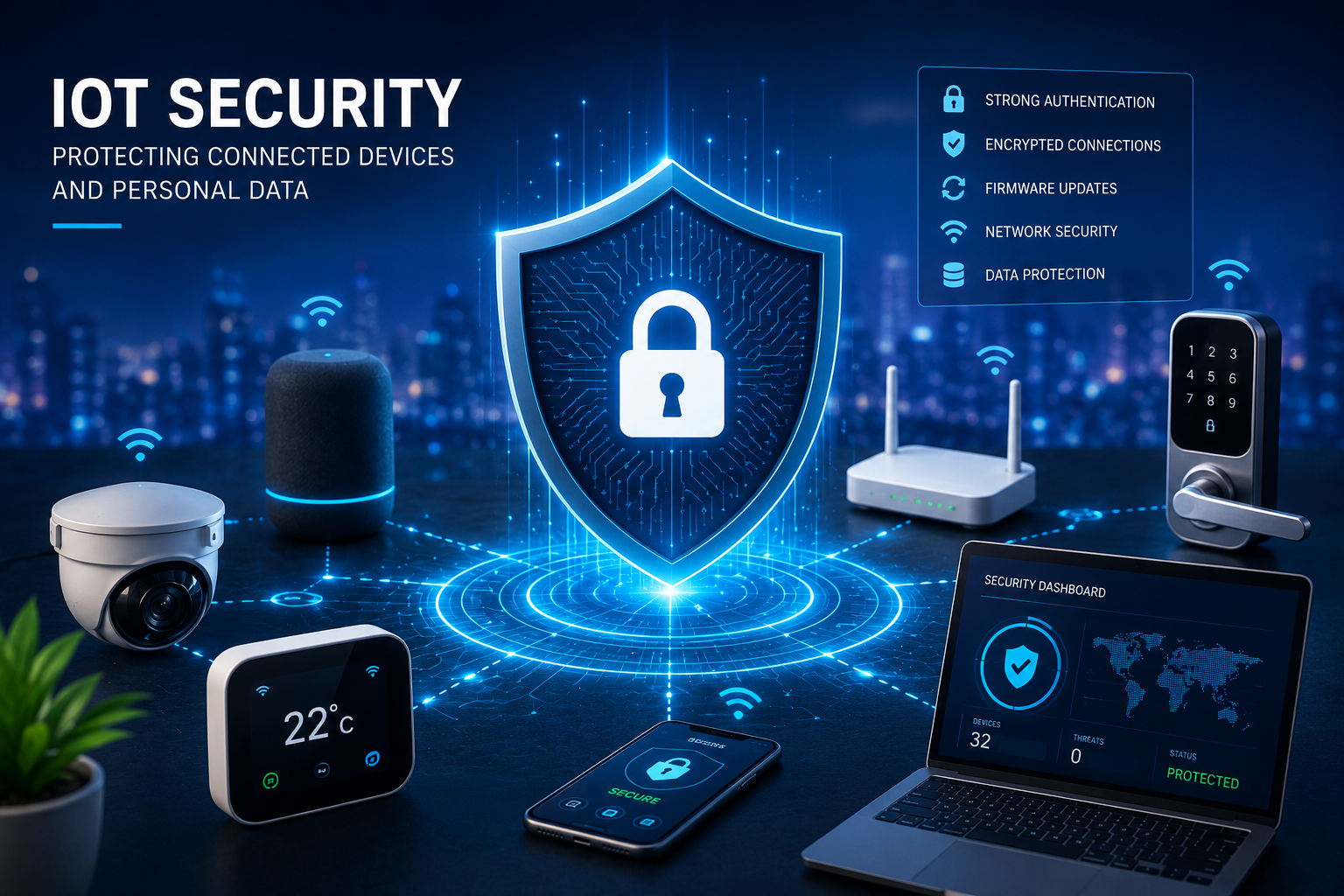
However, convenience should not come at the expense of cybersecurity. Every connected device can potentially become another entry point into a home network. Strong passwords, two-factor authentication, software updates, and secure network configurations are therefore important.
The Role of AI in Smart Homes
The next stage of smart-home development involves combining IoT with artificial intelligence.
Traditional IoT devices primarily collect data and execute predefined instructions. AI can help systems identify patterns and make more adaptive decisions.
For example, instead of simply turning a light on whenever motion is detected, an intelligent system could learn household routines and determine whether lighting is actually necessary.
Similarly, an AI-enabled energy-management system could examine consumption patterns and recommend or automatically implement more efficient settings.
The combination is often described as AIoT, or Artificial Intelligence of Things.
Edge AI is particularly interesting because some processing can occur close to the device instead of sending every piece of data to a remote cloud server. This can improve response times and reduce unnecessary data transmission.
Why Interoperability Matters
One of the historical problems with smart-home technology has been compatibility.
Consumers may purchase products from different manufacturers and discover that they do not work smoothly together. This can create fragmented ecosystems and force users to manage multiple applications.
Industry efforts toward common standards are designed to reduce this problem.
Matter, for example, is an interoperability standard intended to make compatible smart-home products work across different ecosystems. Greater interoperability could make smart homes easier to build because consumers would have more flexibility when choosing devices.
The future smart home is likely to contain products from multiple manufacturers that communicate through standardized technologies rather than operating as isolated systems.
Privacy Challenges in Smart Homes
Smart-home devices can collect significant amounts of information.
Cameras may capture video. Voice-enabled devices can process spoken commands. Motion sensors can reveal occupancy patterns. Energy monitors can provide information about household behavior.
This creates important privacy questions.
Consumers should understand what information devices collect, where it is processed, how long it is retained, and who can access it.
Manufacturers also have a responsibility to build privacy and security into products rather than treating them as optional features.
Smart Homes and Aging Populations
IoT can also support independent living.
Connected sensors can monitor environmental conditions and provide alerts when unusual activity occurs. Smart lighting can reduce the need to navigate dark rooms manually. Automated systems can simplify everyday tasks.
For older adults or people who need additional assistance, these capabilities can provide useful support without requiring constant human intervention.
The objective should not be to replace human care. Instead, IoT can provide additional information and automation that helps people live more independently.
The Future of Smart Appliances
Household appliances are also becoming increasingly connected.
Smart refrigerators, ovens, washing machines, air conditioners, and other appliances can provide information about their operation and allow remote control.
The future may involve greater coordination between appliances.
A home energy system could potentially coordinate an electric vehicle charger, battery, solar panels, and appliances according to energy availability and household demand.
This moves the smart home beyond individual gadgets toward a coordinated digital environment.
Challenges to Smart-Home Adoption
Despite its potential, IoT adoption still has obstacles.
The first is cost. Purchasing several connected devices can become expensive.
The second is complexity. Consumers may struggle with setup, configuration, updates, and troubleshooting.
The third is cybersecurity. Poorly secured devices can create vulnerabilities.
The fourth is interoperability. Although standards are improving, not every device works perfectly with every ecosystem.
Finally, consumers need to consider whether a connected product actually solves a problem. Not every household object needs to be connected.
What the Future Looks Like
The future of smart homes will likely be less about controlling individual devices and more about automation.
Instead of asking whether a refrigerator can connect to the internet, consumers will increasingly ask whether the entire home can intelligently manage energy, comfort, security, and daily routines.
IoT, AI, edge computing, improved connectivity, and interoperability standards are helping move smart homes in this direction.
The most successful smart-home systems will probably be those that operate quietly in the background. The technology should make life easier without requiring constant attention.
Conclusion
IoT is changing the concept of the home from a collection of independent appliances into a connected environment.
Smart homes can improve convenience, energy management, security, accessibility, and automation. At the same time, privacy, cybersecurity, cost, and interoperability must remain important considerations.
The next generation of smart homes will not simply contain more connected devices. They will contain smarter systems capable of understanding context, coordinating actions, and helping people use their homes more efficiently.
The real promise of IoT is therefore not connectivity for its own sake. It is the ability to turn connected information into useful action.