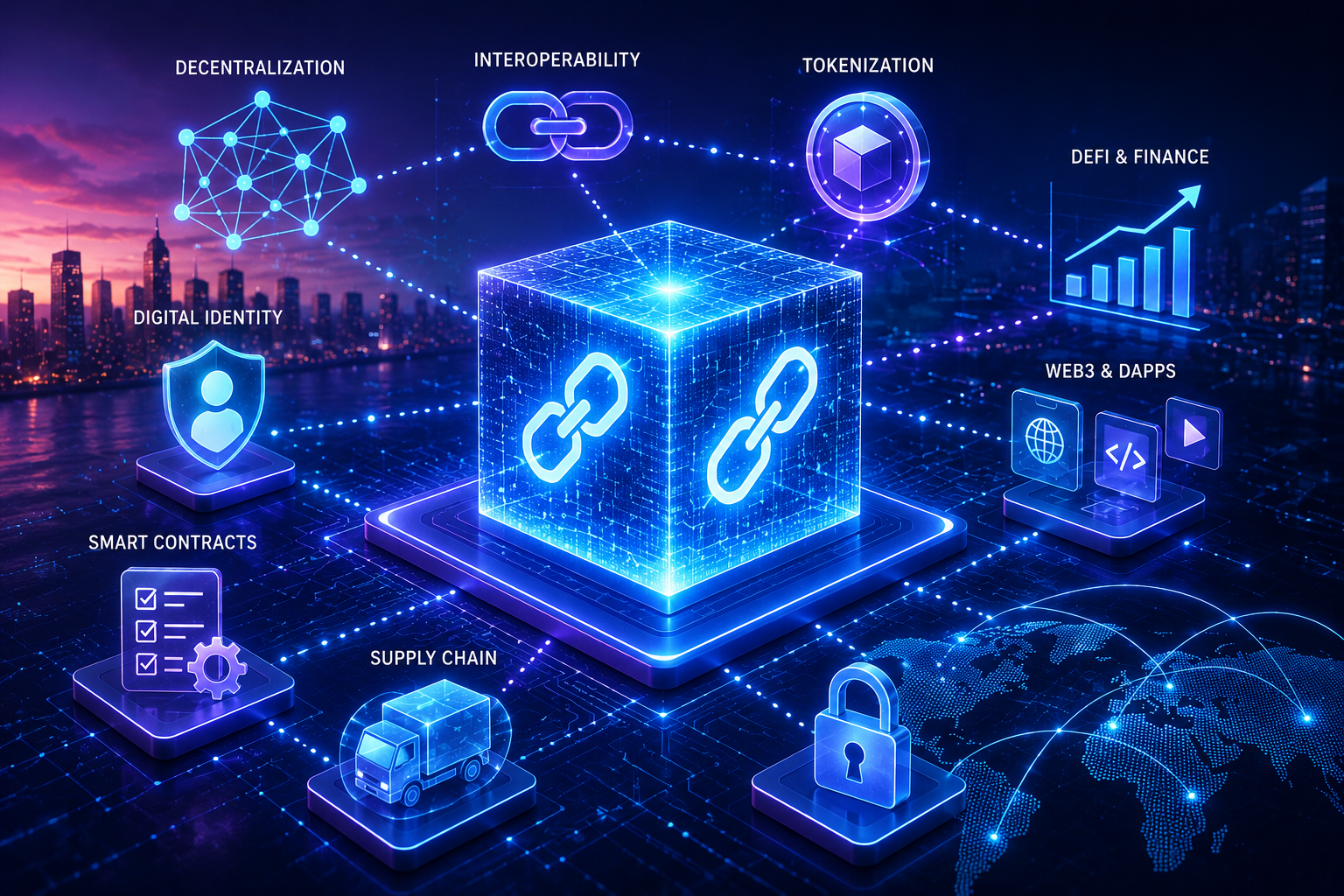
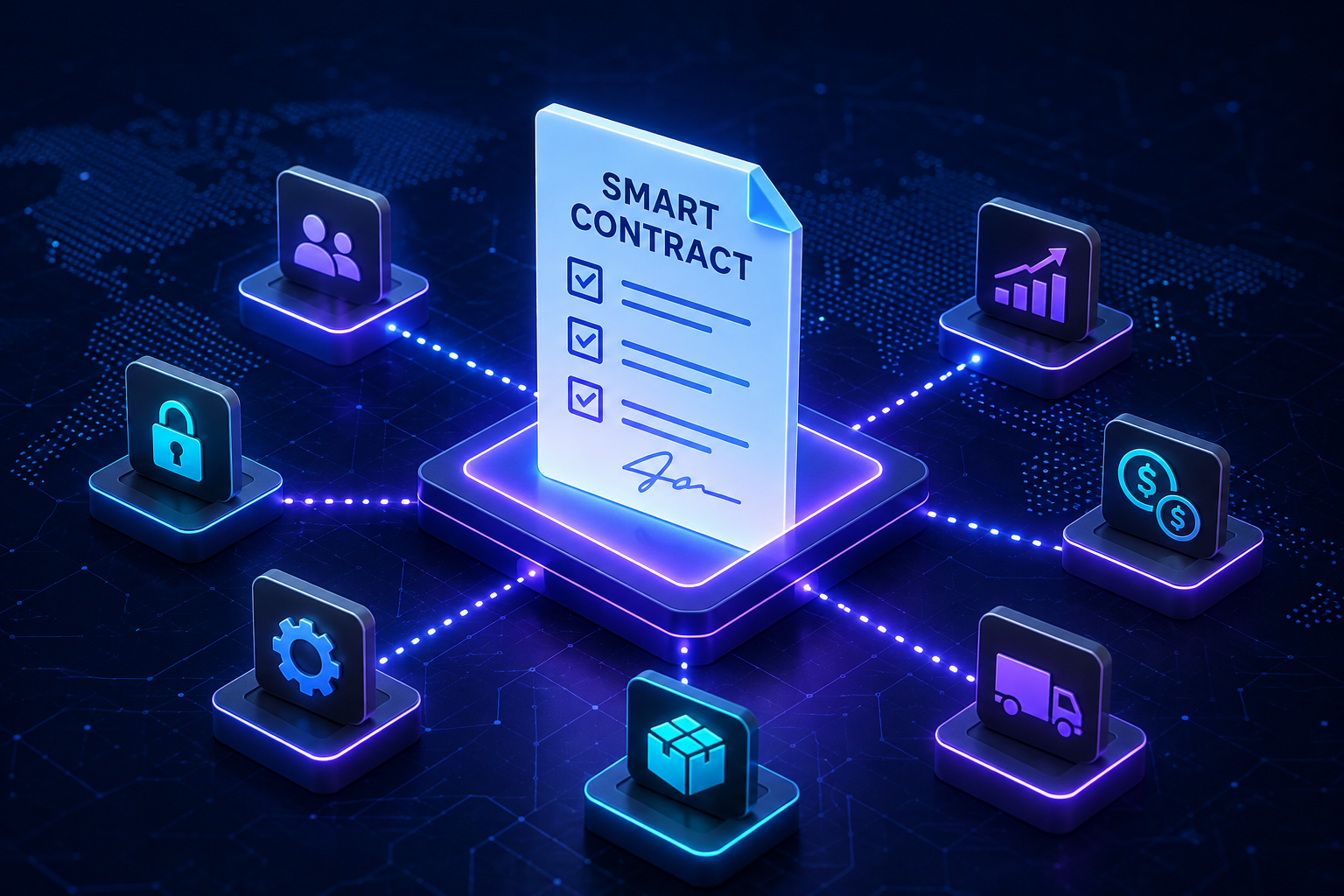
Smart contracts are one of the most important applications of blockchain technology. While blockchain is widely known for recording cryptocurrency transactions, its capabilities extend far beyond digital currencies. Smart contracts allow software programs to automatically execute predefined instructions when specific conditions are met, creating new possibilities for businesses, financial services, digital platforms, and decentralized applications.
Traditional agreements often require intermediaries, paperwork, manual verification, and multiple approval stages. Smart contracts aim to automate some of these processes by converting agreed-upon rules into computer code. When the required conditions are satisfied, the program can perform an action according to its programmed logic.
Although smart contracts offer significant potential, they also introduce technical, legal, and security challenges. Understanding how they work and where they can be useful is essential for organizations exploring blockchain-based solutions.
What Is a Smart Contract?
A smart contract is essentially a computer program deployed on a blockchain network that executes predefined instructions. Instead of depending entirely on a person or organization to carry out every step of an agreement, the software can automatically perform actions when specified conditions are fulfilled.
For example, imagine an agreement between a buyer and a seller. The contract could be programmed so that payment is released automatically once a verified delivery condition is recorded.
The blockchain provides the environment in which the contract operates and records relevant transactions. Because blockchain records are distributed and designed to resist unauthorized modification, participants can have greater confidence that the contract’s execution history has not been secretly altered.
Smart contracts are not necessarily legal contracts in the traditional sense. The term describes their technical operation, while their legal status depends on the jurisdiction, application, and underlying agreement.
How Smart Contracts Work
The basic process behind a smart contract is relatively straightforward.
First, developers write the contract’s rules in programming code. These rules define what should happen when particular conditions occur.
Next, the smart contract is deployed to a blockchain network. Depending on the blockchain, deployment may require transaction fees.
Once deployed, users or other blockchain applications can interact with the contract. The network processes the transaction according to its consensus rules.
When the specified conditions are satisfied, the contract executes the relevant instructions. The resulting transaction or state change is then recorded on the blockchain.
For example, a digital marketplace could use a smart contract to hold payment until a specified transaction condition is completed. Instead of manually processing the payment, the contract could automatically release funds according to its programmed rules.
The important point is that the contract does not make decisions like a human. It follows the logic that developers have programmed into it.
Why Smart Contracts Matter
Smart contracts can reduce the need for manual intervention in certain digital processes.
Traditional agreements may involve intermediaries such as banks, brokers, clearing services, escrow providers, or administrative teams. These intermediaries can provide valuable services, but they can also add costs and processing time.
Smart contracts can automate specific tasks and reduce repetitive administrative work.
They can also create predictable execution. Once the conditions encoded in a contract are satisfied, the corresponding action can occur automatically.
For businesses, this could mean faster processing, fewer manual errors, and more efficient workflows.
However, automation does not eliminate the need for oversight. Poorly designed rules can produce incorrect results just as quickly as well-designed rules produce correct ones.
Smart Contracts in Decentralized Finance
Decentralized finance, commonly called DeFi, is one of the most prominent areas for smart contracts.
DeFi applications can provide financial functions such as lending, borrowing, trading, and asset management through blockchain-based protocols.
Smart contracts can manage transactions according to predefined rules without requiring a traditional financial institution to approve every individual operation.
For example, a lending protocol can use smart contracts to manage deposits, loans, collateral, interest calculations, and repayments.
This creates financial applications that can operate continuously and interact with other blockchain-based systems.
However, DeFi also demonstrates the risks of smart contracts. Vulnerabilities in contract code can expose users and applications to significant losses. As a result, security auditing and careful risk management are extremely important.
Smart Contracts and Supply Chains
Supply chains involve many participants, including manufacturers, suppliers, logistics providers, warehouses, distributors, retailers, and customers.
Smart contracts can potentially automate certain transactions between these participants.
For instance, a contract could be programmed to initiate payment when a verified shipment reaches a specified location or when a delivery record is submitted by an authorized party.
This could reduce administrative delays and make business processes more predictable.
Smart contracts may also work alongside blockchain-based tracking systems to create automated workflows around product movement, quality verification, or compliance documentation.
However, the system still depends on accurate information. If incorrect data is entered into the blockchain, a smart contract may execute the wrong action.
Use in Insurance
Insurance involves numerous processes that can require documentation and verification.
Smart contracts could potentially automate certain claims-related processes when reliable external information is available.
For example, an insurance application might be designed to trigger a predefined payment when an independently verified event satisfies the policy’s conditions.
This could reduce processing time for straightforward claims and limit some manual administrative tasks.
However, insurance is complex, and not every claim can be represented through simple rules. Human judgment may still be required for unusual cases, disputed claims, or situations involving ambiguous evidence.
Smart contracts are therefore more suitable for clearly defined processes than for every aspect of insurance administration.
Real Estate Applications
Real estate transactions involve buyers, sellers, lenders, agents, lawyers, and government authorities. They also require extensive documentation.
Smart contracts could automate parts of property transactions, such as escrow arrangements or payment conditions.
For example, a digital transaction could be structured so that funds are released when predefined verification steps have been completed.
Tokenization can also interact with smart contracts by representing certain rights or interests in digital form.
Nevertheless, property ownership is governed by legal systems. A blockchain record does not automatically replace government property registries or establish legal ownership.
Successful real estate applications therefore require coordination between blockchain technology and existing legal and administrative systems.
Smart Contracts and Digital Assets
Smart contracts are closely connected with the creation and management of digital assets.
They can define rules for issuing, transferring, or interacting with tokens on a blockchain. Digital collectibles, membership tokens, and other blockchain-based assets can use smart contracts to establish ownership and transaction rules.
This enables programmable digital assets.
For businesses, programmable assets can support loyalty programs, digital memberships, ticketing systems, gaming economies, and other applications.
The important advantage is that the asset’s behavior can be connected to software-based rules rather than relying entirely on centralized databases.
Advantages of Smart Contracts
Smart contracts offer several potential benefits.
Automation: Routine actions can occur automatically when specified conditions are satisfied.
Efficiency: Automated workflows may reduce processing time and repetitive administrative work.
Transparency: Depending on the blockchain, contract logic and transaction history may be available for verification.
Consistency: The contract executes according to its programmed instructions rather than changing its behavior from one transaction to another.
Reduced intermediary dependence: Certain processes may require fewer intermediaries.
Auditability: Blockchain records can provide a history of contract interactions and transactions.
These benefits can make smart contracts particularly attractive for processes involving clearly defined rules and multiple participants.
Challenges and Risks
Despite their potential, smart contracts have important limitations.
The first is code vulnerability. A programming mistake can create an exploitable weakness. Since blockchain transactions can be difficult or impossible to reverse, the consequences can be serious.
The second is data reliability. Smart contracts often need information from outside the blockchain. These external data sources are commonly provided through mechanisms known as oracles. If an oracle supplies incorrect information, the contract may execute incorrectly.
Another challenge is legal uncertainty. Whether a smart contract has legal enforceability depends on applicable laws and the specific structure of the agreement.
Scalability and transaction costs can also affect usability. Some blockchain networks may experience congestion or higher fees, making certain applications less practical.
Finally, smart contracts can be difficult for ordinary users to understand. Complex technical logic may create risks when users approve transactions without fully understanding what they are authorizing.
How to Build Safer Smart Contracts
Security should be considered from the beginning of smart contract development.
Developers should follow established secure coding practices and test contracts extensively before deployment. Automated testing can identify certain classes of errors, while independent security audits can provide additional review.
Access controls should be carefully designed so that sensitive functions cannot be triggered by unauthorized users.
Developers should also consider how the contract will respond to unexpected situations. Emergency mechanisms, upgrade approaches, and governance procedures may be appropriate depending on the application.
Users and businesses should avoid assuming that an audited contract is completely risk-free. Audits can reduce certain risks but cannot guarantee that every vulnerability has been identified.
The Future of Smart Contracts
Smart contracts are likely to remain an important part of blockchain development.
As blockchain infrastructure becomes more scalable and interoperable, smart contracts could become increasingly integrated with traditional business systems.
Financial services, supply chains, digital identity, gaming, ticketing, insurance, and digital asset management are among the areas where programmable agreements may continue to evolve.
The future may not involve replacing every traditional contract with code. Instead, smart contracts are more likely to complement conventional agreements by automating specific processes that can be expressed clearly in software.
Greater regulatory clarity and improvements in security could also encourage wider adoption.
Conclusion
Smart contracts demonstrate how blockchain technology can move beyond simple transaction recording and support programmable digital processes. By automatically executing predefined rules, they can reduce manual work, improve efficiency, and enable new types of decentralized applications.
Their potential is significant, but so are their risks. Smart contracts depend on reliable code, accurate data, secure infrastructure, and appropriate legal frameworks. A poorly designed contract can automate mistakes just as efficiently as a well-designed contract can automate useful processes.
For businesses, the most practical approach is to identify processes where rules are clear, repetitive, and suitable for automation. When used carefully, smart contracts can become a valuable tool for creating faster, more transparent, and programmable digital workflows.