Introduction
Robotics is becoming one of the most influential technologies of the modern era, changing how people work, manufacture products, explore dangerous environments, and manage everyday activities. From automated machines operating in factories to robotic assistants helping doctors perform complex procedures, robotics is creating new possibilities across industries. What once seemed like science fiction is increasingly becoming part of daily life.
The development of artificial intelligence (AI), advanced sensors, computer vision, and machine learning has made modern robots more capable than traditional automated machines. They can recognize objects, navigate unfamiliar environments, perform precise movements, and adapt to changing conditions. These capabilities are expanding the role of robotics beyond industrial production into healthcare, agriculture, logistics, education, construction, and domestic applications.
As businesses search for greater efficiency and accuracy, robotics is becoming an important investment for organizations of different sizes. At the same time, researchers are developing machines that can collaborate with humans, complete repetitive tasks, and operate in environments that are difficult or dangerous for people.
This article explores the meaning of robotics, its major applications, emerging innovations, benefits, challenges, and potential impact on the future.
What Is Robotics?
Robotics is a field of technology that combines engineering, computer science, electronics, mechanics, and intelligent software to design, build, and operate robots.
A robot is a programmable machine that can perform specific tasks automatically or with human supervision. Depending on its design, it may follow predefined instructions, respond to environmental information, or use artificial intelligence to make decisions within certain limits.
Robotics involves several important components.
Mechanical Structure: The physical body of a robot includes its frame, joints, wheels, arms, and other moving components. The structure determines how the robot moves and what tasks it can perform.
Sensors: Sensors collect information about the robot’s surroundings. Cameras, distance sensors, temperature detectors, pressure sensors, and force sensors help robots identify objects and respond to environmental changes.
Control Systems: Controllers coordinate the robot’s movements and actions. They process commands, interpret sensor information, and determine how different components should operate.
Software and Programming: Software provides the instructions that control a robot’s behavior. Depending on the application, programming may involve basic commands, motion planning, image recognition, or AI-based decision-making.
Actuators: Actuators convert electrical, hydraulic, or pneumatic energy into movement. They allow robots to lift objects, rotate joints, move wheels, and operate tools.
When these components work together, a robot can perform tasks ranging from simple repetitive movements to complex operations that require precision and environmental awareness.
Types of Robots Used Today
Robotics includes many different categories of machines. Each type is designed for particular working conditions and operational requirements.
1. Industrial Robots
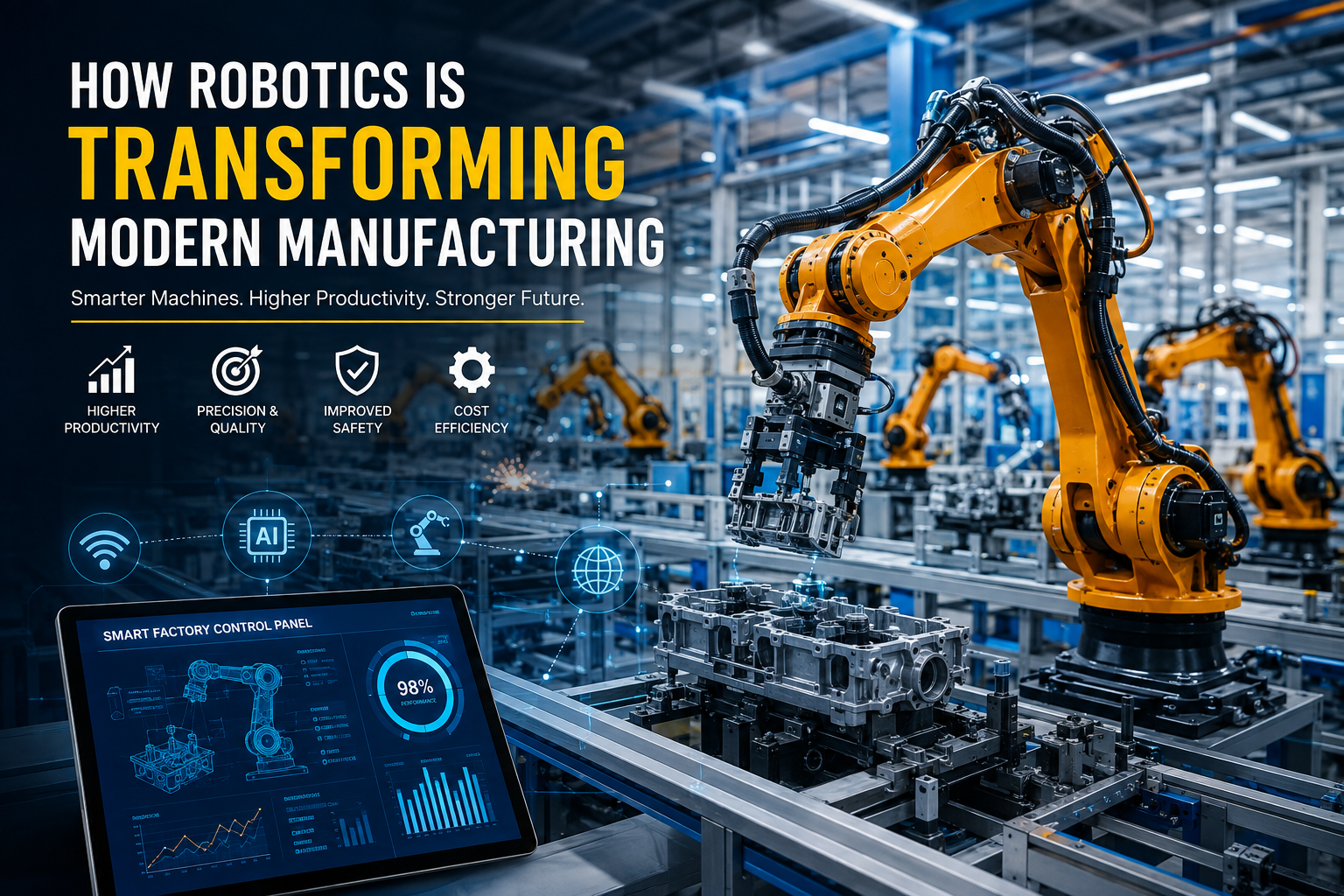
Industrial robots are widely used in manufacturing facilities. They perform activities such as welding, painting, assembling components, packaging products, and handling heavy materials.
These robots can operate with high precision and repeat the same movements thousands of times. Manufacturers use them to improve production consistency, increase output, and reduce workers’ exposure to hazardous processes.
Robotic arms are particularly common in automobile manufacturing, electronics production, metalworking, and other industries that require accurate movements.
2. Collaborative Robots
Collaborative robots, commonly called cobots, are designed to work alongside people in appropriate environments.
Unlike many traditional industrial robots, which operate inside restricted safety areas, cobots can be configured for shared workspaces when the complete application meets applicable safety requirements.
For example, a cobot might help an employee lift components, assemble small products, inspect parts, or package items.
These systems can be useful for small and medium-sized businesses that need automation but cannot justify a large industrial robotics installation.
3. Mobile Robots
Mobile robots move through an environment using wheels, tracks, legs, or other locomotion systems.
Autonomous mobile robots are used in warehouses, hospitals, distribution centers, and manufacturing facilities. They can transport supplies, move inventory, and deliver materials between different locations.
Some mobile robots follow fixed routes, while others use sensors and mapping technologies to navigate changing environments.
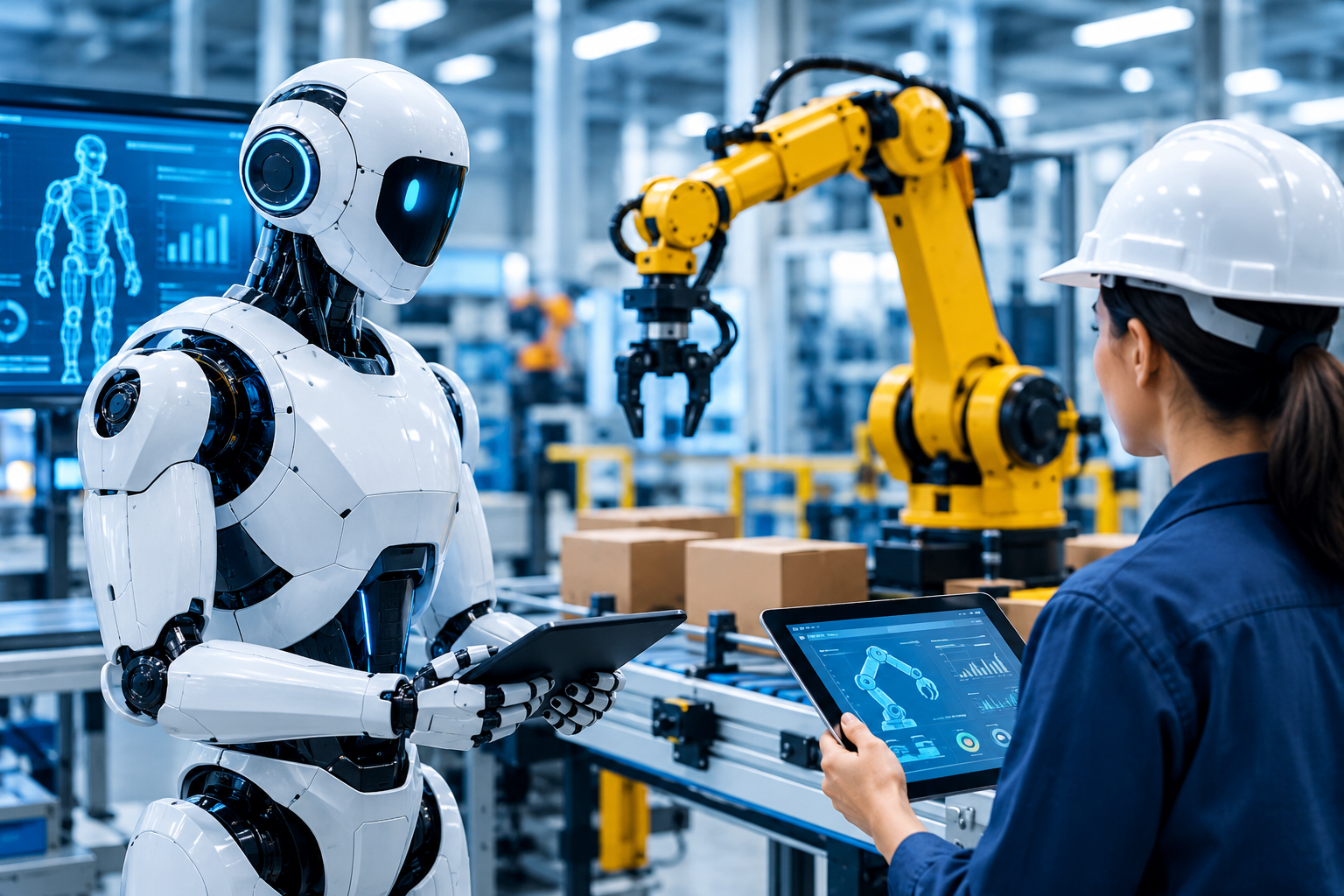
4. Humanoid Robots
Humanoid robots are designed with human-like physical characteristics, such as a head, torso, arms, and legs.
Their appearance and movement can make them suitable for research into environments designed around human bodies. Potential applications include industrial assistance, equipment handling, research, and selected service tasks.
However, human-like movement remains technically challenging. Many humanoid robots are expensive, require careful supervision, and cannot yet match people across the wide range of tasks performed in ordinary environments.
5. Medical Robots
Medical robots support healthcare professionals in selected clinical and laboratory tasks.
Surgical robotic systems can help trained surgeons control instruments with precision. Other medical robots assist with rehabilitation, patient positioning, laboratory automation, and the transportation of supplies within healthcare facilities.
These machines do not eliminate the need for medical expertise. Their effectiveness depends on appropriate training, clinical oversight, safety procedures, and the specific application.
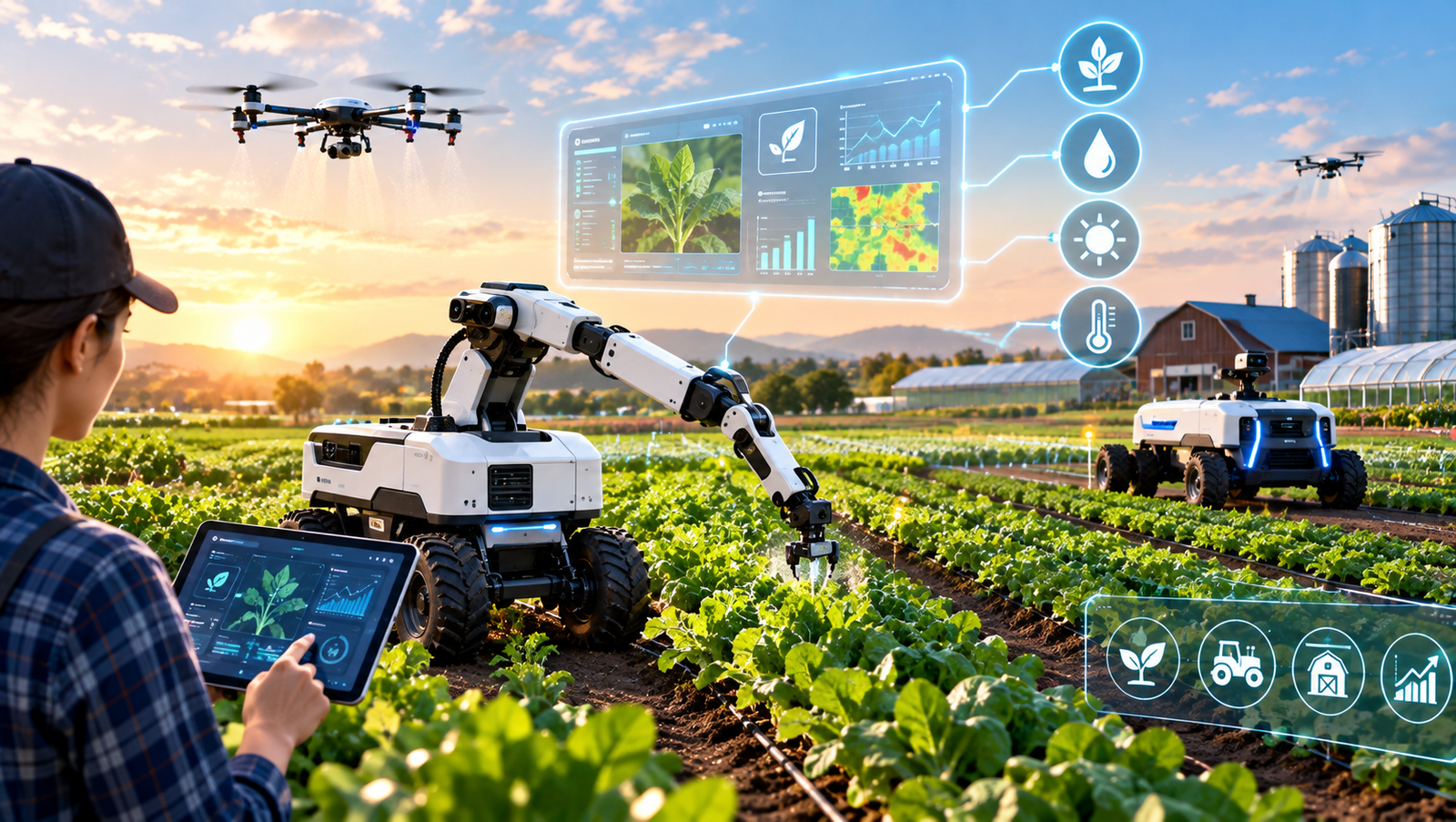
6. Agricultural Robots
Agricultural robots help farmers manage labor-intensive activities such as planting, harvesting, weeding, spraying, and crop monitoring.
Some systems use cameras and AI models to identify weeds or evaluate plant health. Others use GPS, environmental sensors, and autonomous navigation to operate across fields.
Agricultural robotics can support more precise use of water, fertilizers, and pesticides when the equipment is properly designed and managed.
7. Service and Domestic Robots
Service robots perform tasks outside traditional industrial manufacturing.
Examples include robotic vacuum cleaners, floor-cleaning machines, delivery robots, and certain hospitality assistants.
Domestic robots are generally designed to perform a narrow range of household activities. Although they can reduce routine effort, most still require people to manage maintenance, obstacles, setup, and unexpected situations.
How Artificial Intelligence Is Improving Robotics
Artificial intelligence is expanding what robots can accomplish by helping them interpret information, recognize patterns, and respond to changing circumstances.
Traditional robots often follow predefined instructions. They perform effectively when their surroundings and tasks remain predictable, but unexpected objects or environmental changes can create difficulties.
AI-enabled robotics introduces more flexible ways to process information.
Computer Vision and Object Recognition
Computer vision allows robots to analyze images and video captured by cameras.
Using computer vision, a robot may identify a product on a conveyor belt, distinguish between different objects, detect obstacles, or locate a component that needs to be picked up.
In warehouses, this capability can help automated systems handle packages with different shapes and sizes.
Machine Learning
Machine learning allows a system to identify patterns in data and improve certain capabilities through training.
In robotics, machine learning can support object classification, predictive maintenance, motion planning, and the interpretation of sensor information.
For example, a robotic inspection system may learn to recognize visual patterns associated with manufacturing defects. Its performance still needs to be tested and monitored because incorrect classifications can cause quality problems.
Natural Language Interaction
Advances in language technology are making it possible to develop robots that respond to spoken or written instructions.
A worker might ask a robot to bring a particular component, move an item to a designated station, or report the status of a task.
However, understanding a command does not automatically mean that a robot can execute it safely. The system must translate the instruction into feasible actions and verify that the requested operation is permitted.
Adaptive Motion and Planning
AI can help robots plan movements around obstacles and adjust actions based on information collected from their surroundings.
This is especially valuable in warehouses, laboratories, and industrial settings where objects or people may move unexpectedly.
Even so, robots need reliable safety mechanisms, testing, and operating limits. AI does not make every machine fully autonomous or capable of handling every situation.
Major Applications of Robotics Across Industries
Robotics is no longer limited to automobile factories. Its applications are expanding across sectors that require accuracy, speed, consistency, or the ability to work in challenging environments.
Robotics in Manufacturing
Manufacturing remains one of the most established applications of robotics.
Factories use robots to weld metal, assemble electronics, paint surfaces, inspect products, and move materials between workstations.
Robotic automation can increase consistency and reduce repetitive manual effort. It can also help manufacturers maintain production during certain shifts when staffing is difficult.
Modern manufacturing facilities increasingly combine robotic equipment with industrial sensors, connected machines, and software that monitors production performance.
This integration allows businesses to identify bottlenecks, schedule maintenance, and improve production planning.
Robotics in Healthcare
Healthcare robotics is developing in areas such as surgery, rehabilitation, diagnostics support, and hospital logistics.
Robotic surgical platforms allow trained surgeons to manipulate specialized instruments through a computer-controlled system. Depending on the procedure, these systems may provide enhanced instrument control or visualization.
Rehabilitation robots can support repetitive movements during physical therapy, while laboratory robots can automate sample handling and testing workflows.
Hospitals may also use mobile robots to transport medication, linen, equipment, or supplies.
The primary objective is to support healthcare teams and improve selected clinical or operational processes. Medical decisions and patient care still require appropriate professional judgment.
Robotics in Agriculture
Agriculture faces challenges involving labor availability, resource management, crop monitoring, and changing weather conditions.
Robots can help address some of these problems through precision operations.
For example, a robotic weeding machine can identify and remove selected weeds. A crop-monitoring robot may collect images that help farmers evaluate plant development. Automated harvesting systems can collect certain crops under suitable conditions.
These technologies can reduce repetitive work and improve operational precision.
Nevertheless, agricultural robots must deal with uneven ground, changing light, dust, rain, and plants that vary in size and position. These factors can make real-world performance more difficult than performance in controlled demonstrations.
Robotics in Warehousing and Logistics
E-commerce has increased the demand for efficient storage, order processing, and delivery operations.
Warehouses use robots to move inventory, transport containers, sort packages, and support order fulfillment. Some systems bring storage shelves or containers to human workers, reducing the distance employees need to walk.
Robotic systems can also help organizations track inventory and maintain consistent material flow.
In logistics, autonomous delivery robots are being tested or deployed for specific short-distance delivery applications. Their practical use depends on local regulations, pedestrian safety, terrain, weather, and infrastructure.
Robotics in Construction
Construction sites involve physically demanding tasks and potentially hazardous working conditions.
Robotic technologies are being developed for bricklaying, concrete printing, surveying, demolition, inspection, and material handling.
Drones can collect aerial images of construction sites, while ground-based robots can inspect certain structures or access restricted areas.
Robotic equipment may improve measurement accuracy and reduce workers’ exposure to selected hazards.
However, construction environments change continuously, making it difficult to automate every activity. Human supervision and coordination remain essential.
Robotics in Space Exploration
Space exploration demonstrates the value of robotics in environments that are difficult or impossible for humans to access directly.
Robotic spacecraft and planetary rovers collect scientific information, photograph distant surfaces, and investigate geological features.
Robotic systems can also inspect spacecraft components and support operations in environments where communication delays make direct human control difficult.
Because space missions face strict limits on weight, energy, and repair opportunities, robots must be designed for reliability under extreme conditions.
Robotics in Disaster Response
Robots can support emergency teams during fires, industrial accidents, earthquakes, and other disasters.
Ground robots may enter unstable structures to collect information. Aerial drones can help locate people, map damaged areas, and identify dangerous conditions.
Specialized underwater robots can inspect submerged structures or support search operations.
These systems can reduce the need to expose emergency personnel to certain hazards. Their usefulness depends on communication reliability, battery capacity, environmental conditions, and the ability of operators to interpret the collected information.
Emerging Robotics Innovations to Watch
The next stage of robotics development will likely involve greater adaptability, improved sensing, more effective human-machine collaboration, and closer integration with intelligent software.
1. General-Purpose Robots
Many current robots are designed to perform a limited set of tasks. Researchers and companies are working toward systems that can perform several related activities without requiring extensive reprogramming for every new task.
A general-purpose robot might be designed to pick up objects, organize supplies, operate simple tools, and respond to instructions within a controlled environment.
Achieving reliable performance across different objects and settings remains a major challenge. Robots must understand their physical surroundings, control their movements, and recover safely when something goes wrong.
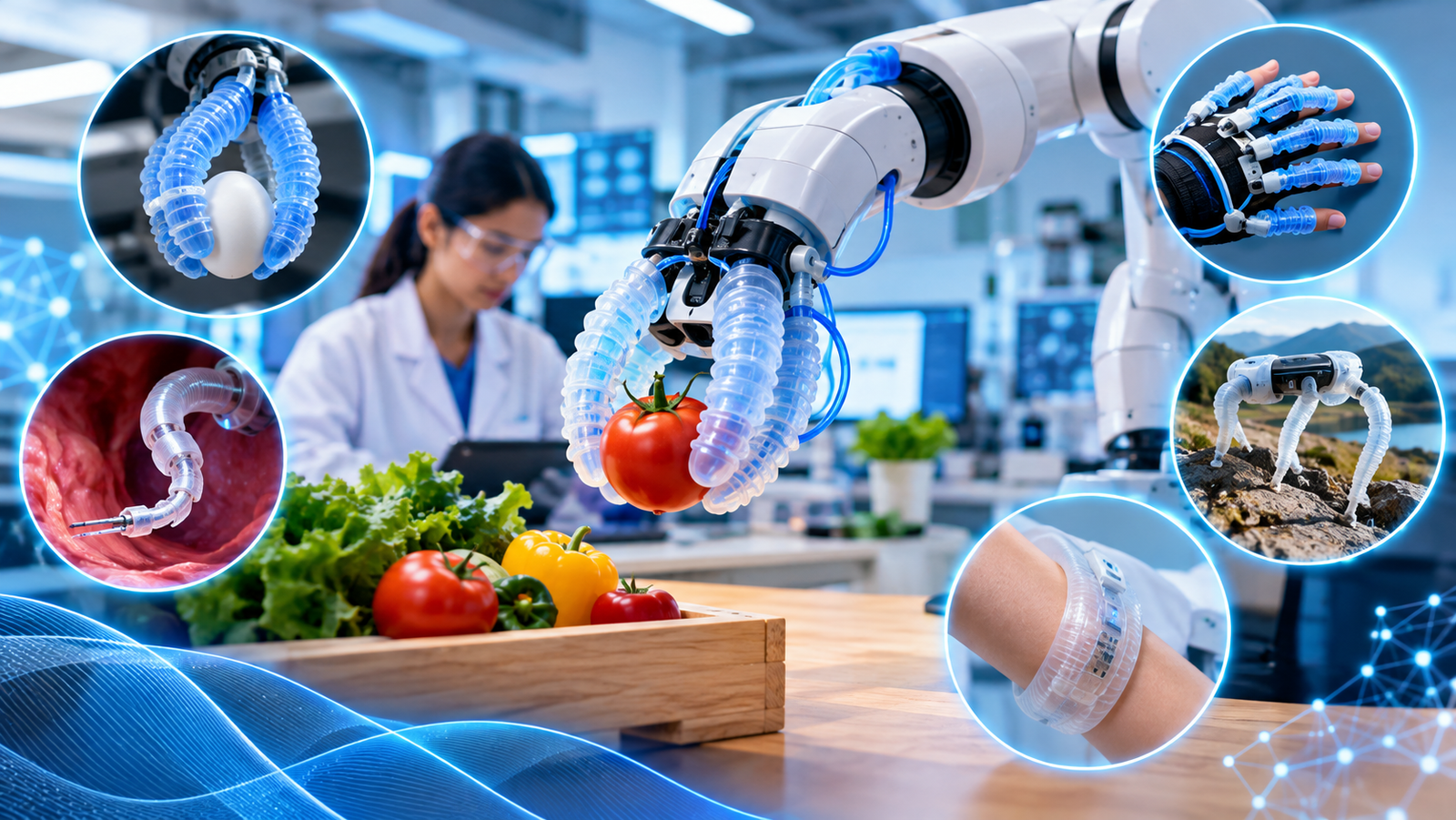
2. Soft Robotics
Soft robotics uses flexible materials and compliant structures instead of relying exclusively on rigid metal frames and joints.
These robots can be useful when handling fragile objects, interacting with biological materials, or moving through confined spaces.
For example, a soft robotic gripper may handle delicate fruit without applying excessive pressure. Medical researchers are also investigating flexible robotic devices for specialized healthcare applications.
The technology presents challenges involving durability, precise control, sensing, and the integration of flexible components with electronic systems.
3. Swarm Robotics
Swarm robotics involves groups of relatively simple robots coordinating their behavior to accomplish a larger objective.
Inspired partly by the collective behavior of insects and other animals, swarm systems can distribute tasks among multiple machines.
Potential applications include environmental monitoring, agricultural surveying, search operations, and coordinated inspection.
Instead of relying entirely on one complex machine, a swarm may divide work across several units. However, communication failures, coordination problems, and the difficulty of managing large groups can limit effectiveness.
4. Digital Twins for Robotics
A digital twin is a virtual representation of a physical system that can be updated using operational data.
In robotics, digital twins can help engineers simulate movement, evaluate workflows, test configurations, and identify potential problems before making physical changes.
For example, a manufacturer can model a robotic production line to determine whether a new arrangement improves material flow.
Simulation cannot perfectly reproduce every real-world condition, so physical testing remains necessary. Nevertheless, digital twins can reduce development time and support better planning.
5. Human-Robot Collaboration
Future workplaces may increasingly combine human judgment with robotic precision.
Robots can perform repetitive lifting, transport materials, and complete standardized movements, while people supervise operations, solve unusual problems, and make decisions requiring contextual understanding.
Effective collaboration requires intuitive controls, clear communication, suitable workspace design, and reliable safety measures.
The objective is not simply to put humans and robots in the same room. It is to design workflows in which both can contribute effectively.
Benefits of Robotics
Robotics offers several potential benefits when systems are selected and implemented appropriately.
Higher Productivity: Robots can perform repetitive tasks consistently and may operate for extended periods with scheduled maintenance.
Improved Precision: Automated movement and sensor-based control can reduce variation in tasks such as assembly, measurement, and inspection.
Enhanced Workplace Safety: Robots can perform certain hazardous activities, including handling dangerous materials or entering environments unsuitable for direct human access.
Reduced Repetitive Work: Automation can take over physically demanding or monotonous activities, allowing employees to focus on supervision, maintenance, planning, and other responsibilities.
Consistent Quality: Robots can repeat established procedures with limited variation, although their performance still depends on calibration, programming, component quality, and maintenance.
Operational Insights: Connected robotic systems can generate information about production rates, equipment performance, and recurring problems.
Support for Difficult Environments: Specialized robots can operate in areas with extreme temperatures, limited access, hazardous substances, or other challenging conditions.
The value of robotics depends on the task. A robot may be highly beneficial in a large production facility but financially impractical for a business with low production volumes or frequently changing requirements.
Challenges and Limitations of Robotics
Despite its advantages, robotics faces several important challenges.
High Initial Investment
Industrial robotic systems may require substantial spending on equipment, installation, software, safety systems, and employee training.
Businesses must evaluate the total cost of ownership rather than considering the purchase price alone.
Maintenance, replacement parts, energy consumption, integration, and downtime can influence the long-term financial results.
Technical Complexity
Robots need appropriate programming, calibration, testing, and maintenance.
An automated system may perform poorly if its sensors are incorrectly configured, components become damaged, or operating conditions change significantly.
Organizations need trained personnel who can monitor the system and resolve problems.
Limited Adaptability
Many robots work best in controlled environments.
A machine trained to identify particular objects may struggle when lighting changes, objects are damaged, or unfamiliar items appear. Complex tasks requiring flexible reasoning and fine motor control remain difficult to automate reliably.
Safety Concerns
Robots can cause injuries if they move unexpectedly, malfunction, or operate without adequate protective measures.
Safe deployment may require physical barriers, emergency stops, speed restrictions, monitoring systems, and risk assessments.
Collaborative applications require particular attention to the complete system, including tools, payloads, and surrounding equipment.
Cybersecurity Risks
Connected robots may communicate with business networks, cloud services, and industrial control systems.
Poorly secured connections can expose equipment to unauthorized access, operational disruption, or data theft.
Organizations should use appropriate access controls, software updates, network segmentation, monitoring, and incident-response procedures.
Employment and Workforce Changes
Automation can change the demand for different types of work.
Some repetitive activities may require fewer workers, while new opportunities can emerge in robotics maintenance, programming, engineering, safety, and system integration.
The transition is not always straightforward. Employees may need retraining, and some communities may face significant disruption if local employment depends heavily on automatable activities.
Businesses and policymakers should consider education, reskilling, worker support, and the distribution of automation’s benefits.
How Robotics Is Changing the Future of Work
Robotics is likely to reshape many occupations rather than simply eliminate or preserve entire professions.
In manufacturing, employees may increasingly supervise automated production lines and diagnose equipment problems. In healthcare, specialists may use robotic tools to support selected procedures. In logistics, workers may coordinate fleets of mobile robots and resolve exceptions that automated systems cannot handle.
These changes increase the importance of technical literacy, problem-solving, communication, and the ability to work with automated systems.
Robotics-related career opportunities include:
- Robotics engineer
- Automation engineer
- Robot programmer
- Mechatronics technician
- Robotics maintenance specialist
- Computer vision engineer
- Industrial automation technician
- Robotics software developer
- Control systems engineer
- Robotics research scientist
The qualifications for these roles vary. Engineering positions often require relevant technical degrees, while technician and maintenance roles may be accessible through vocational education, technical diplomas, apprenticeships, or specialized training.
Students interested in robotics can begin with mathematics, physics, programming, electronics, and hands-on projects. Practical experience with sensors, microcontrollers, simulation tools, and small robotic platforms can help build foundational skills.
Robotics and Sustainability
Robotics can contribute to sustainability by improving resource efficiency, reducing certain forms of waste, and supporting environmental monitoring.
In manufacturing, robots can help apply materials more consistently, reducing defects in suitable production processes. Agricultural robots can support precise spraying and targeted weeding. Inspection robots can identify equipment problems before they lead to major failures.
Robots can also help scientists collect environmental information in forests, oceans, and other difficult-to-access locations.
However, robotics is not automatically environmentally friendly.
Producing electronic components, batteries, motors, and mechanical parts requires resources and energy. Operating large automated facilities also consumes electricity.
A meaningful sustainability assessment should consider the robot’s complete lifecycle, including manufacturing, operation, maintenance, repair, and disposal.
What Does the Future of Robotics Look Like?
The future of robotics will likely be shaped by advances in AI, materials science, computing, sensing, and engineering.
Robots may become easier to program and more capable of handling variations in everyday tasks. Improvements in battery technology could support longer operating periods for mobile systems, while better sensors may improve navigation and object manipulation.
Smaller robots could become increasingly useful in specialized medical procedures, inspection, and research. Large-scale robotic systems may support industrial production, warehouse operations, and infrastructure maintenance.
Another important development will be the integration of robotics with connected devices and enterprise software. Businesses may use shared data to coordinate production, monitor equipment, and adjust workflows according to changing demand.
Nevertheless, progress will not be uniform. Some applications are already commercially mature, while others remain experimental. Cost, reliability, regulation, safety, public acceptance, and access to technical expertise will influence the pace of adoption.
The most successful systems will likely be those that solve clearly defined problems, demonstrate measurable value, and operate reliably under real-world conditions.
Conclusion
Robotics is transforming the way industries operate and creating new possibilities for healthcare, agriculture, manufacturing, logistics, construction, and scientific research. By combining mechanical engineering, sensors, software, and artificial intelligence, modern robots can perform tasks with increasing precision and flexibility.
The technology offers important benefits, including improved productivity, consistent quality, reduced repetitive work, and safer handling of certain hazardous activities. At the same time, organizations must address implementation costs, technical limitations, cybersecurity, worker training, and employment transitions.
As robotic systems become more accessible and intelligent, collaboration between humans and machines will become increasingly important. People will continue to provide judgment, creativity, oversight, and problem-solving in situations where automated systems have limitations.
Ultimately, the future of robotics will depend not only on technological progress but also on how responsibly these systems are designed, deployed, and managed. When implemented thoughtfully, robotics can become a valuable tool for building safer workplaces, more efficient industries, and innovative solutions to real-world challenges.