Introduction
Robotics has traditionally been associated with rigid metal machines, industrial robotic arms, automated assembly lines, and powerful mechanical systems. These machines have transformed manufacturing by performing repetitive tasks with speed, accuracy, and consistency. However, a new generation of robots is changing how engineers think about robotic design. Instead of relying entirely on rigid structures and mechanical joints, these innovative machines use flexible materials, adaptable structures, and nature-inspired movements.
This emerging field is known as soft robotics, and it is opening new possibilities across healthcare, agriculture, food processing, environmental exploration, and assistive technology. Soft robots can bend, stretch, twist, and adapt to objects or environments in ways that conventional machines often struggle to achieve.
As industries seek safer, more adaptable, and more efficient automation solutions, soft robotics is attracting increasing attention. Its potential extends beyond factories, offering new approaches to delicate medical procedures, agricultural harvesting, underwater exploration, and human-machine interaction.
Understanding this technology provides valuable insight into the next stage of robotic innovation and how machines may become more compatible with the natural world.
What Is Soft Robotics?
Soft robotics is a branch of robotics that focuses on creating machines from flexible materials rather than relying exclusively on rigid metal, plastic, and conventional mechanical components.
These robots may use silicone, elastomers, flexible polymers, textiles, and other materials that can deform under pressure. Their structures are often inspired by living organisms, including octopuses, worms, caterpillars, and human muscles.
Traditional industrial robots typically follow predetermined paths through precisely controlled joints. Soft robots, by comparison, can change their shapes to interact with objects that have different sizes, textures, and levels of fragility.
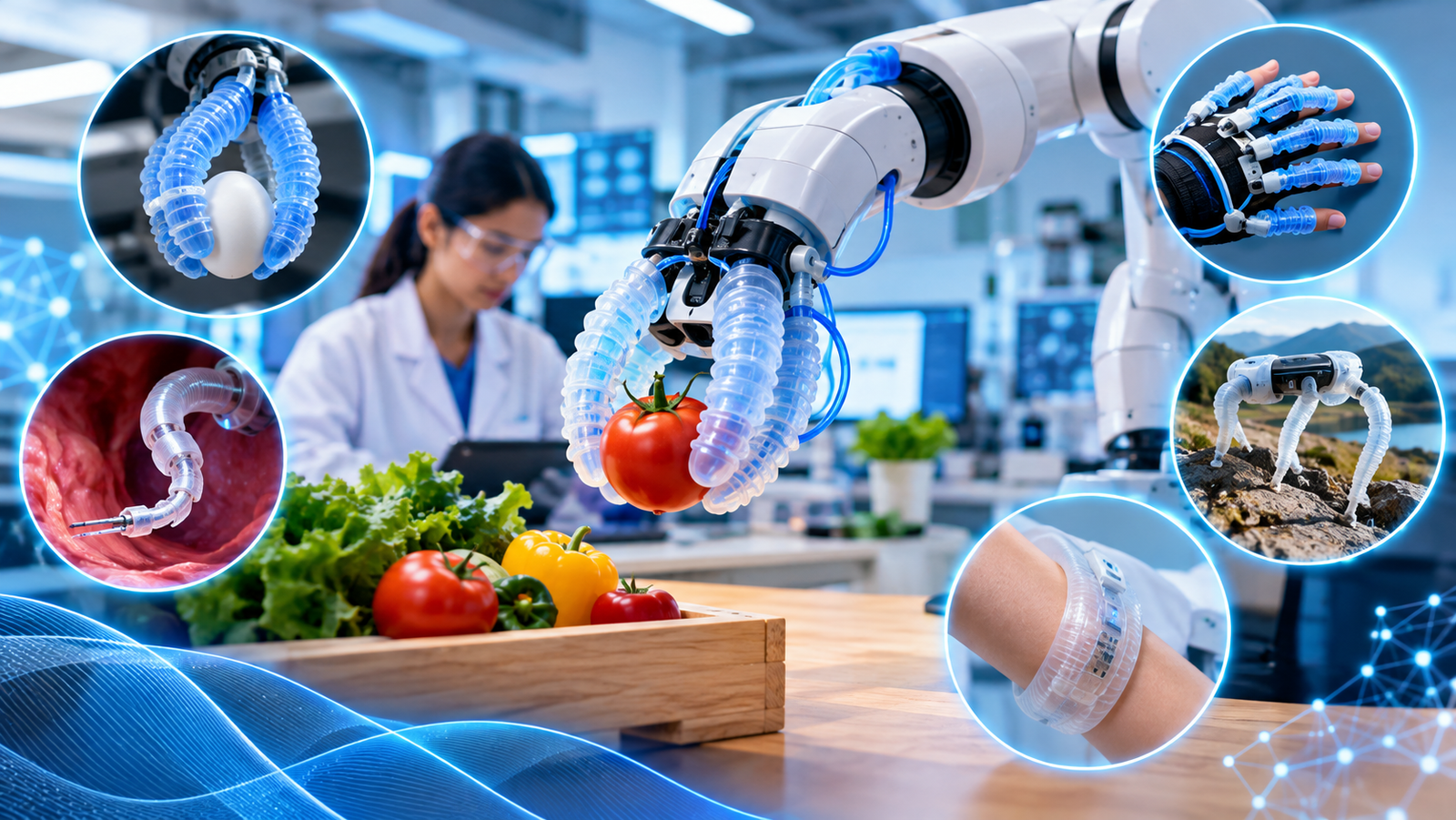
For example, a conventional robotic gripper may need different attachments to handle a glass bottle, a ripe tomato, and a delicate electronic component. A soft robotic gripper can potentially adapt its shape to hold several different objects without applying excessive force.
Soft robotics does not mean that every component must be flexible. Many systems combine soft bodies with rigid sensors, electronic controllers, pumps, or structural supports. The objective is to create robots that can perform tasks requiring adaptability, gentle contact, and movement through complex environments.
How Soft Robots Work
Soft robots use specialized materials, actuators, sensors, and control systems to produce movement. Their designs vary according to the task they must perform.
1. Flexible Materials
The materials used in soft robots allow their bodies to deform without breaking. Silicone and similar elastomers are common choices because they can stretch, compress, and recover their original shapes.
Researchers also investigate flexible textiles, shape-changing polymers, and advanced composite materials. The choice depends on factors such as durability, operating temperature, chemical exposure, and the amount of force required.
2. Pneumatic and Hydraulic Actuation
Some soft robots move by changing the pressure inside flexible chambers. Compressed air or liquid causes sections of the robot to expand, bend, or contract.
A soft robotic hand, for example, may contain several air-filled channels. When pressure enters these channels, the fingers curl around an object. Releasing the pressure allows the fingers to return to their previous positions.
Other systems use electric motors, cables, magnetic forces, or materials that change shape in response to heat or electrical stimulation.
3. Sensors and Feedback
Soft robots need information about their surroundings to move safely and accurately.
Pressure sensors can measure contact forces, while flexible strain sensors can detect stretching and bending. Cameras, proximity sensors, and other electronic components may also help robots identify objects and understand their positions.
Sensor information allows a controller to adjust movement according to changing conditions. This is particularly important when handling fragile products or interacting with people.
4. Intelligent Control Systems
Artificial intelligence and machine learning can help soft robots interpret sensor data, recognize objects, and adapt their actions.
However, not every soft robot requires AI. Some operate through simple pressure controls or predetermined movement sequences. More sophisticated systems combine flexible hardware with advanced algorithms to handle uncertain environments.
This combination of adaptable materials and intelligent control is one of the most promising aspects of modern robotics.
Applications of Soft Robotics Across Different Industries
1. Healthcare and Medical Assistance
Healthcare is one of the most promising areas for soft robotics because medical procedures often involve delicate tissues, narrow spaces, and unpredictable movements.
Soft robotic instruments can potentially assist surgeons by providing flexible movement and controlled contact. Their designs may be useful for navigating complex anatomical structures where rigid instruments have limited maneuverability.
Researchers are also developing soft wearable devices that support movement and rehabilitation. These devices may help patients perform exercises after injuries or neurological conditions by applying controlled assistance to particular body parts.
Soft robotic gloves, for example, can support finger movement for people who have difficulty gripping objects. Wearable robotic systems may also help rehabilitation professionals measure progress and adjust therapy.
Other potential applications include flexible endoscopic tools, assistive devices, and systems that help clinicians perform repetitive physical tasks.
Nevertheless, medical soft robots must meet demanding requirements for safety, sterilization, reliability, and clinical effectiveness. Their use in healthcare depends on rigorous testing and appropriate regulatory approval.
2. Agriculture and Precision Farming
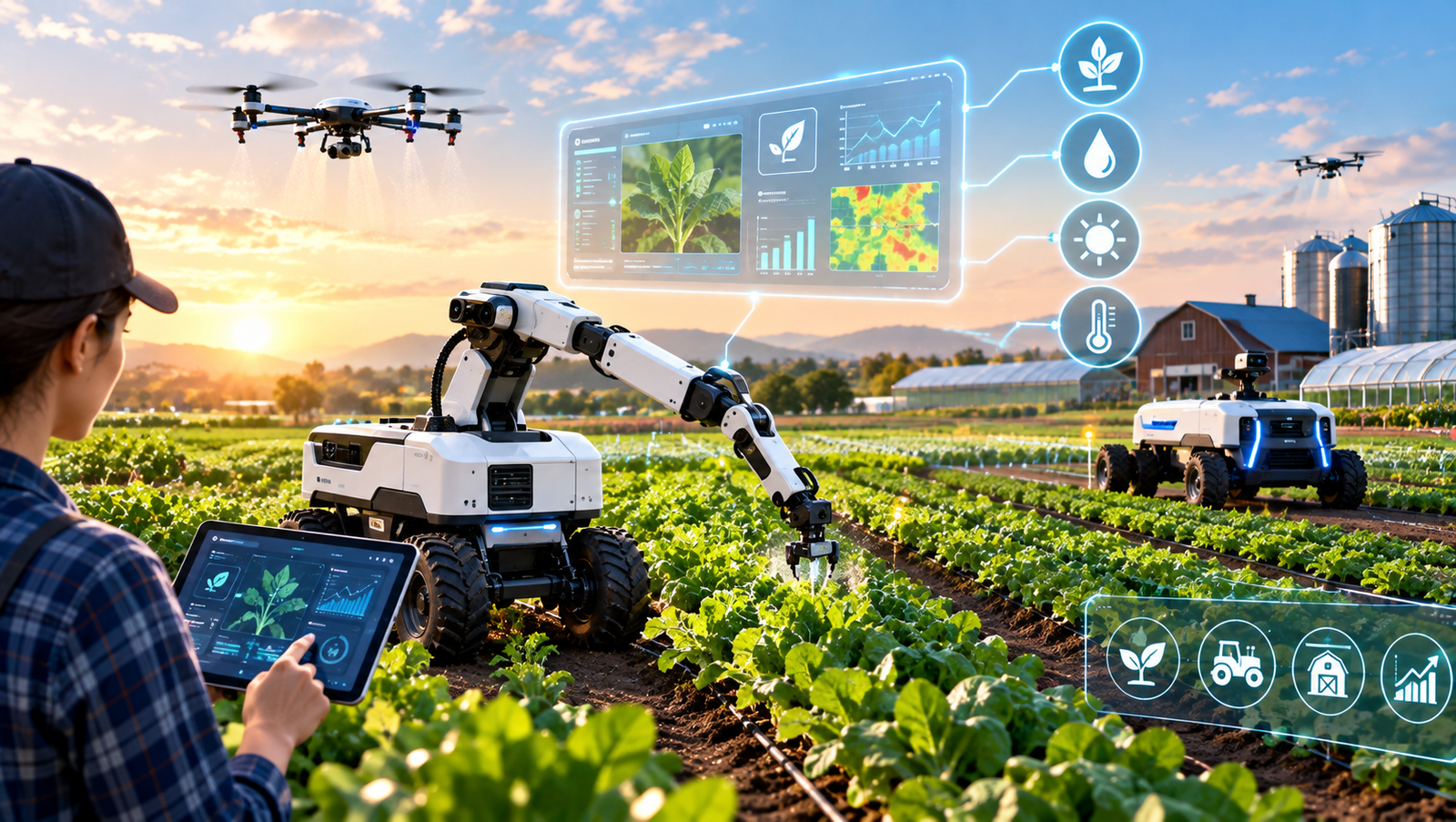
Agriculture presents challenges that conventional automation cannot always solve easily. Fruits and vegetables vary in shape, size, ripeness, and firmness. Plants may also grow in irregular arrangements, making harvesting difficult for rigid machines.
Soft robotic grippers can offer a more adaptable approach.
A robotic harvesting system equipped with flexible fingers could gently grip produce without causing unnecessary bruising. When combined with cameras and machine vision, the system may identify ripe crops and determine how to pick them.
Potential applications include harvesting strawberries, tomatoes, peppers, and other delicate produce.
Soft robotics could also support nursery operations, seedling handling, and the movement of fragile plants. In controlled agricultural environments, robots may perform repetitive tasks while reducing the physical workload of farm workers.
However, agricultural deployment still faces challenges involving outdoor durability, changing weather, plant recognition, maintenance costs, and the speed of harvesting.
The most effective solutions will likely combine soft grippers with conventional robotic arms, intelligent vision systems, and specialized agricultural equipment.
3. Food Processing and Packaging
Food processing facilities handle products that range from hard containers to delicate baked goods and soft fruits. Handling these different items without damage can be difficult for conventional automation.
Soft robotic grippers provide a way to manage products with varying shapes and textures.
In a packaging facility, a flexible gripper may pick up a pastry without crushing it, arrange produce in a container, or transfer irregularly shaped food items between processing stages.
These systems can also reduce the need to redesign grippers for every product type.
Food-related applications require careful attention to hygiene. Materials must be suitable for food contact, easy to clean, and resistant to the chemicals used during sanitation.
Manufacturers must also ensure that flexible components remain durable under repeated use. With appropriate engineering, soft robotics could help food businesses improve consistency while reducing product waste.
4. Underwater Exploration
Underwater environments are difficult for robotic systems because of water pressure, currents, limited visibility, and the delicate nature of marine ecosystems.
Conventional underwater robots are valuable for inspection and exploration, but rigid equipment can be less suitable for interacting with fragile marine organisms.
Researchers are investigating soft robotic structures inspired by aquatic animals. Flexible fins, tentacle-like arms, and deformable bodies can produce movements that resemble those of living creatures.
Such designs may help robots move through confined spaces or approach marine organisms with reduced mechanical disturbance.
Potential applications include coral reef research, marine biology, underwater infrastructure inspection, and environmental monitoring.
Soft underwater robots could eventually assist scientists in studying sensitive habitats where heavy equipment might cause damage.
However, underwater soft robots must withstand pressure, resist corrosion, manage power consumption, and maintain reliable control. These requirements make their design particularly challenging.
5. Disaster Response and Search Operations
Natural disasters can leave behind collapsed buildings, unstable structures, and narrow passages that are difficult for rescuers to access.
Soft robotic systems could provide additional options for searching these environments.
A flexible robot might move through small gaps, bend around obstacles, or inspect spaces that are inaccessible to larger machines. Equipped with cameras, microphones, or environmental sensors, it could transmit information to emergency teams.
Researchers are exploring deformable robotic bodies and bio-inspired designs that can move through confined environments.
Such robots could potentially support searches following earthquakes, industrial accidents, and structural collapses.
Their practical usefulness depends on several factors, including resistance to dust and debris, communication reliability, battery life, and the ability to recover when movement becomes restricted.
Soft robots would complement rather than replace trained rescue personnel and established emergency-response equipment.
6. Wearable Robotics and Human Assistance
Wearable robotics combines robotic mechanisms with equipment that people can wear to support movement or reduce physical effort.
Traditional powered exoskeletons often rely on rigid frames and mechanical joints. Soft wearable robots take a different approach by using flexible straps, textile structures, cables, or inflatable actuators.
These systems may assist people during rehabilitation, support certain movements, or reduce the physical demands of repetitive work.
For example, a soft wearable device could help support a person’s elbow during a repetitive task or provide assistance during selected rehabilitation exercises.
In industrial environments, wearable assistance may help workers perform physically demanding activities. In healthcare, it could support mobility training under professional supervision.
The design must prioritize comfort, freedom of movement, and safe force delivery. Poorly fitted equipment can cause discomfort or interfere with natural movement.
Successful wearable robots therefore require careful adjustment to individual users and the activities they perform.
The Role of Artificial Intelligence in Soft Robotics
Soft robotics becomes more capable when its flexible physical structures are combined with intelligent software.
Artificial intelligence can help robots recognize objects, estimate their shapes, interpret sensor signals, and select suitable movements.
For example, a robotic harvesting system may use computer vision to locate a ripe tomato. Its control system can then position a flexible gripper and adjust the applied force to avoid damaging the fruit.
Machine learning may also help researchers model complicated movements. Because soft materials deform continuously, their behavior can be more difficult to predict than the movement of a conventional rigid mechanism.
AI-based models can assist with estimating deformation, adapting control strategies, and identifying unusual operating conditions.
However, intelligent software does not automatically make a robot safe or reliable. Soft robots still need robust hardware, suitable sensors, predictable control mechanisms, and extensive testing.
In safety-critical applications, engineers must ensure that the system can respond appropriately when sensors fail, communication is interrupted, or unexpected contact occurs.
The future of soft robotics will depend on effective cooperation between mechanical engineering, materials science, computer vision, control theory, and AI.
Major Advantages of Soft Robotics
Soft robotics offers several potential benefits over conventional robotic designs.
Improved adaptability: Flexible bodies can change shape to interact with objects of different sizes and forms.
Gentler handling: Soft contact surfaces can reduce the risk of damaging delicate products when the system is properly designed and controlled.
Safer physical interaction: Deformable structures may reduce certain collision risks when robots work near people, although safety still requires comprehensive engineering.
Access to confined spaces: Flexible designs can help some robots navigate narrow passages and irregular environments.
Nature-inspired movement: Soft structures can reproduce certain bending, crawling, and swimming motions found in living organisms.
Versatile gripping: A single adaptable gripper may handle a wider range of objects than a specialized rigid gripper.
These advantages make soft robotics especially attractive for tasks in which adaptability and gentle interaction matter more than maximum force or extremely rigid positioning.
Challenges and Limitations
Despite its potential, soft robotics faces important technical and commercial obstacles.
Limited Precision
Flexible materials can deform in complex ways, making it difficult to predict the exact position of every part of a robot. This can complicate tasks requiring extremely precise movement.
Researchers are developing better sensors and control algorithms to improve positioning and repeatability.
Durability Concerns
Soft materials can suffer from punctures, tears, fatigue, and wear after repeated deformation. Exposure to heat, chemicals, sunlight, or moisture can also affect performance.
Improving material durability remains essential for robots intended for long-term industrial use.
Difficult Control Systems
A rigid robotic arm typically has clearly defined joints and measurable positions. A soft robot may deform across its entire body, creating many possible shapes.
Controlling this behavior requires suitable mathematical models, sensors, and feedback mechanisms.
Energy and Equipment Requirements
Pneumatic and hydraulic robots may need pumps, compressors, tubing, and pressure-control systems. These components can increase system size and maintenance requirements.
Other actuation methods introduce their own limitations, including power consumption, heat generation, or restricted movement.
Manufacturing Costs
Specialized materials, custom molds, sensors, and testing procedures can make development expensive. Some designs may be economical in research settings but difficult to manufacture at commercial scale.
Standardized components and improved production methods could help lower costs over time.
Safety and Reliability
Flexible materials do not automatically guarantee safe operation. A soft robot can still apply excessive force, fail unexpectedly, or damage nearby equipment.
Reliable systems require careful testing, fault detection, appropriate safeguards, and maintenance procedures.
Soft Robotics and Sustainable Technology
Sustainability is becoming an important consideration in robotic design. Soft robotics may contribute to more efficient production and reduced material waste in selected applications.
For example, gentle robotic handling can reduce damage to food products and fragile goods. Better harvesting systems may help agricultural businesses collect produce with fewer losses.
Soft robots may also support environmental research by providing new ways to monitor sensitive habitats.
Nevertheless, their environmental benefits depend on how they are manufactured, powered, maintained, and disposed of. Some flexible polymers are difficult to recycle, and specialized components may have limited repairability.
Future development should therefore consider durable materials, modular construction, energy efficiency, and end-of-life recycling.
Designing robots that can be repaired rather than discarded could further improve their long-term environmental performance.
The Future of Soft Robotics
The future of soft robotics will likely involve greater integration with AI, advanced materials, compact sensors, and conventional automation systems.
One important direction is the development of robots that can adapt their behavior to changing environments. Such systems could select different gripping strategies depending on an object’s shape, weight, and fragility.
Another area of research involves self-healing materials. These materials are designed to repair certain types of damage, potentially extending the service life of flexible robotic components. However, practical performance varies by material and application, and self-healing capabilities do not eliminate the need for inspection and maintenance.
Researchers are also exploring compact actuators that can operate without bulky external equipment. Advances in soft electronics may make it easier to integrate sensing and control directly into flexible structures.
In healthcare, more comfortable wearable robots could support selected rehabilitation and mobility tasks. In agriculture, adaptive grippers may improve the automation of delicate harvesting operations. In environmental science, flexible underwater systems could help researchers study fragile ecosystems.
The pace of adoption will depend on whether these systems can demonstrate reliable performance, reasonable operating costs, and clear advantages over existing technologies.
Rather than replacing all conventional robots, soft robotics is likely to become an additional tool for applications where flexibility and safe physical interaction are especially valuable.
How Businesses Can Prepare for Soft Robotics
Businesses interested in soft robotics should begin by identifying tasks that require delicate handling, flexible movement, or frequent changes in object shape.
A food-processing company, for instance, could evaluate whether soft grippers reduce product damage during packaging. An agricultural business could test whether flexible harvesting equipment performs effectively on a specific crop.
Pilot projects should measure productivity, maintenance requirements, energy consumption, product quality, and total operating costs.
Organizations should also consider how soft robots will integrate with existing machinery, software platforms, quality-control systems, and worker training programs.
Starting with a clearly defined task can help businesses determine whether soft robotics provides a practical advantage over traditional automation.
Collaboration with robotics engineers, equipment manufacturers, and research institutions may also help organizations evaluate new technologies before making large investments.
Conclusion
Soft robotics represents an important development in the evolution of intelligent machines. By combining flexible materials, adaptable movement, sensing technologies, and increasingly sophisticated control systems, it offers new ways to automate tasks that require precision, gentle handling, and interaction with unpredictable environments.
Its potential applications extend across healthcare, agriculture, food processing, underwater exploration, disaster response, and wearable assistance. At the same time, challenges involving durability, control, manufacturing costs, and reliability must be addressed before every promising design becomes commercially practical.
The most significant opportunity lies in choosing the right technology for the right task. Rigid robots remain highly effective for heavy lifting, repeatable industrial operations, and high-speed manufacturing. Soft robots offer a complementary approach when adaptability and flexible physical interaction are more important.
As research continues and manufacturing techniques improve, soft robotics may help create machines that are not only more capable but also better suited to working alongside people and interacting with the natural world.